
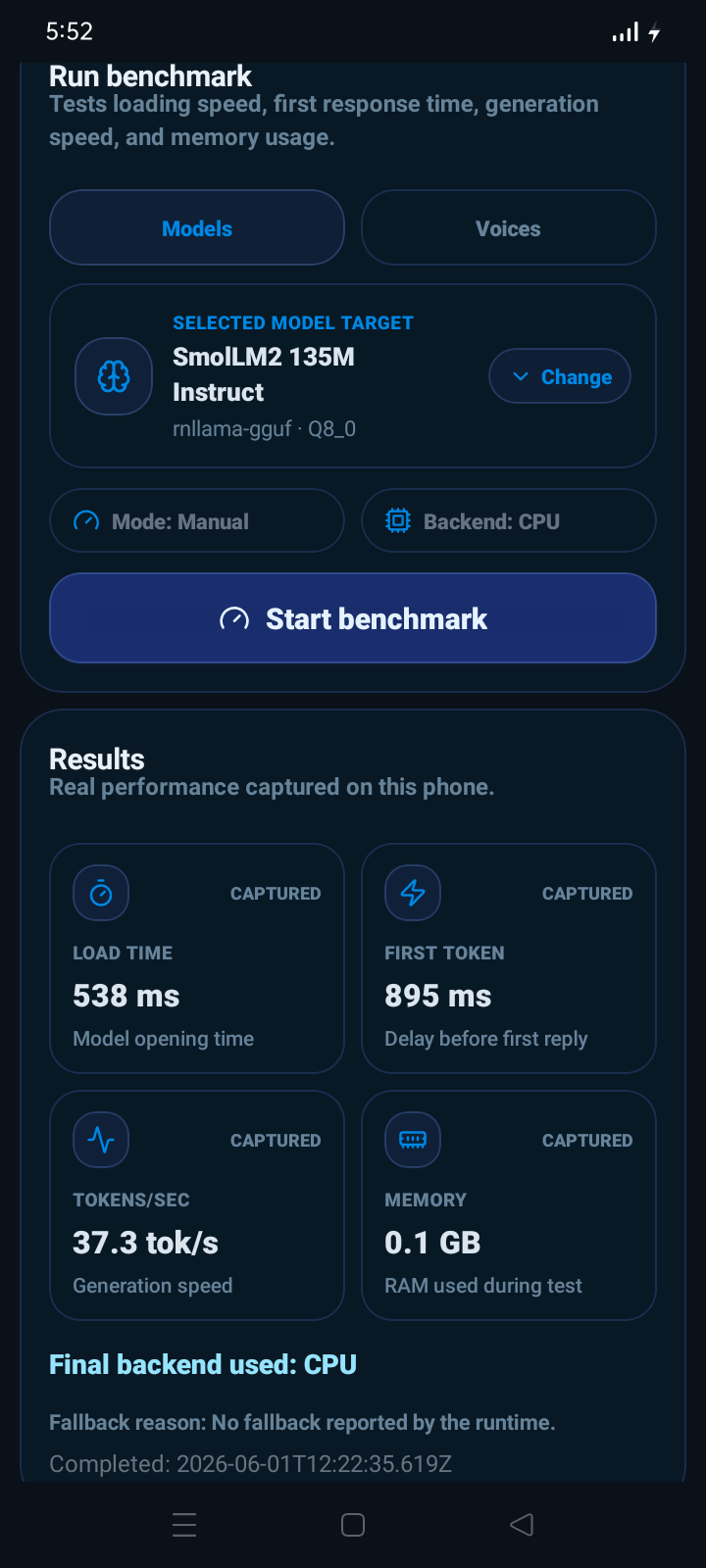
CPU baseline
Realme C3 — lightweight CPU benchmark
Budget-phone proof showing Q17 Private AI running a small local text model on CPU.
Realme C3Results vary by phone model, Android version, RAM, storage, chipset, GPU driver, selected model, backend, app version, and runtime stability. CPU is the broad compatibility baseline. OpenCL is used where supported and stable.
CPU is the widest compatibility path for Q17 Private AI. These screenshots show local AI running across budget, old, and modern Android phones.
Budget-phone proof showing Q17 Private AI running a small local text model on CPU.
Realme C3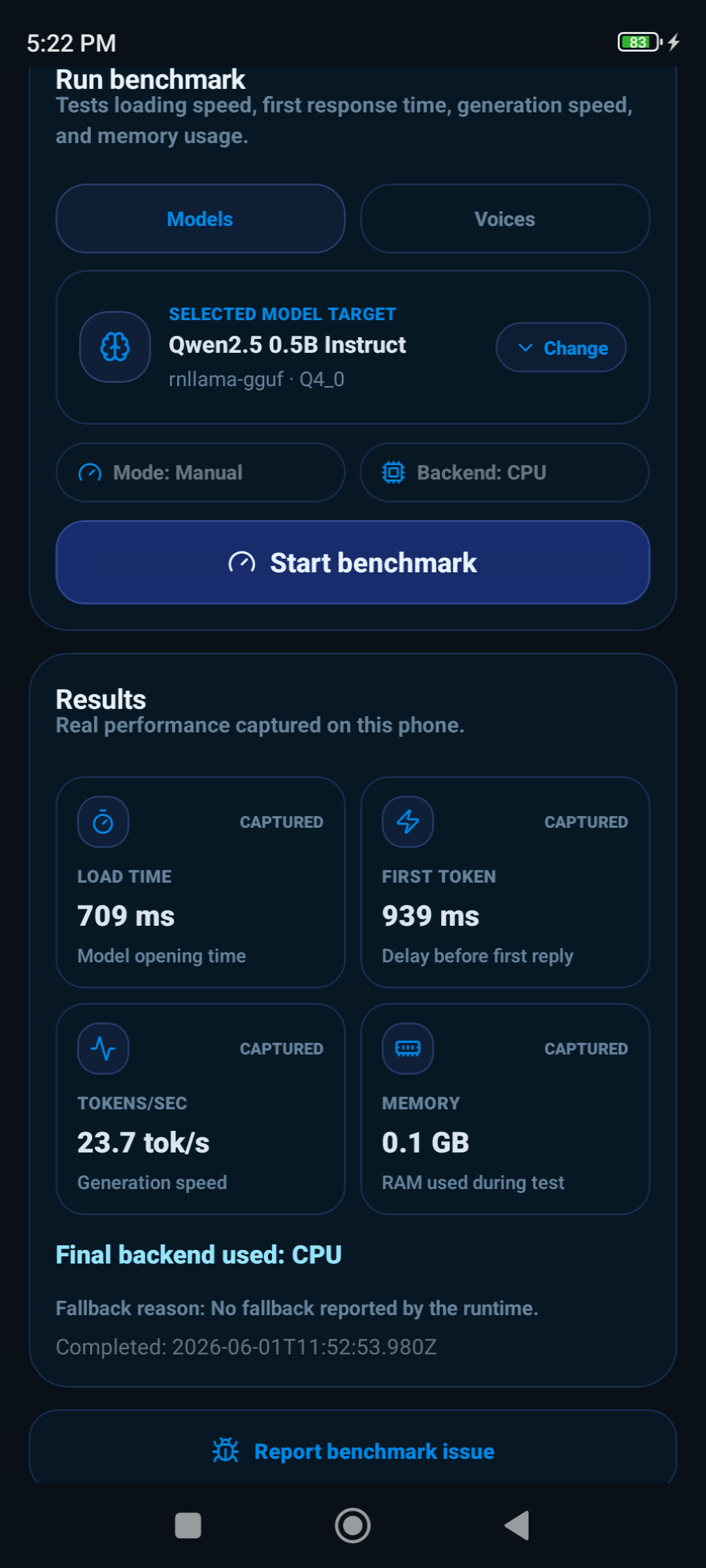
Affordable Android proof showing local Qwen text-model performance on CPU.
POCO M2 Pro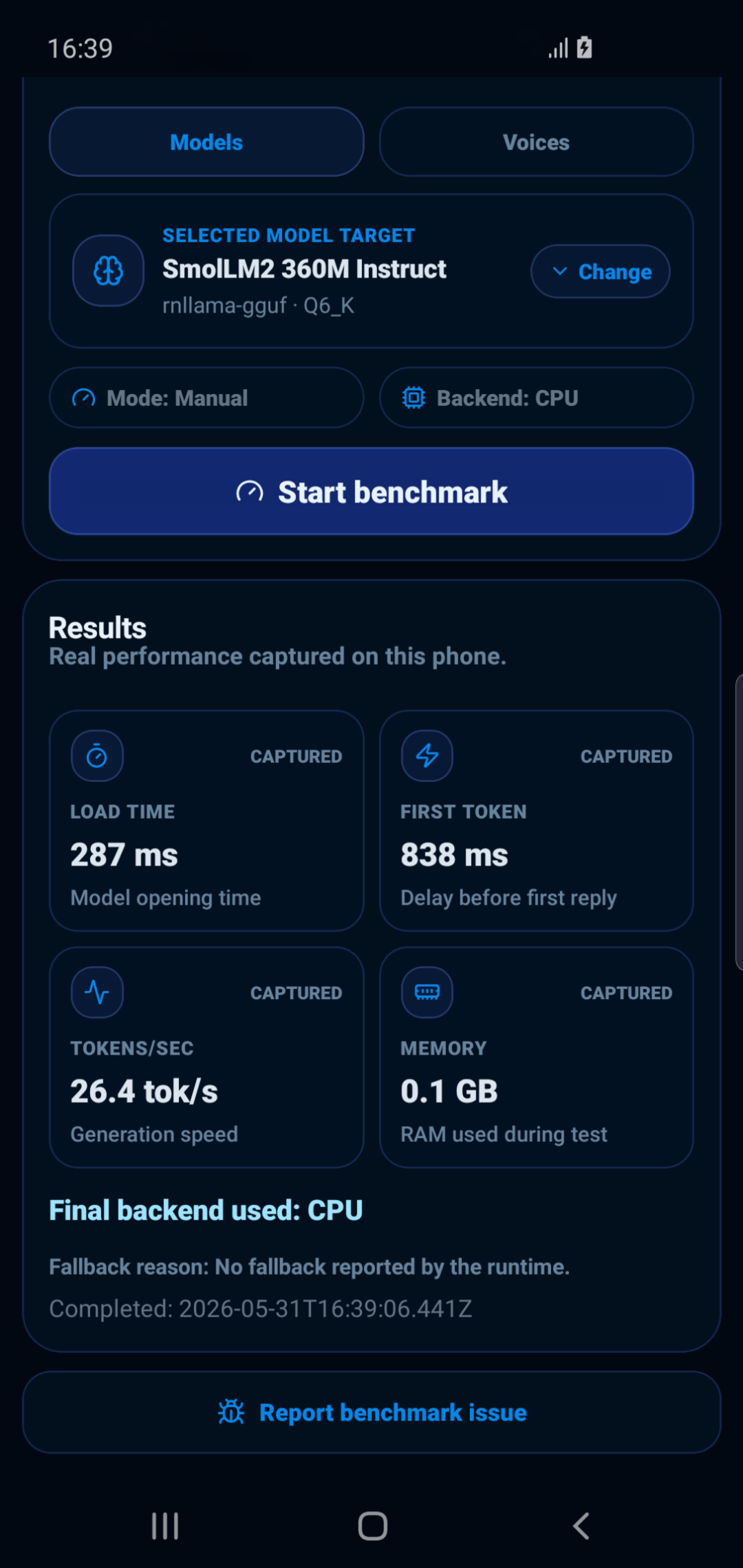
Older Android hardware proof showing Q17 Private AI running local inference on CPU.
Samsung S10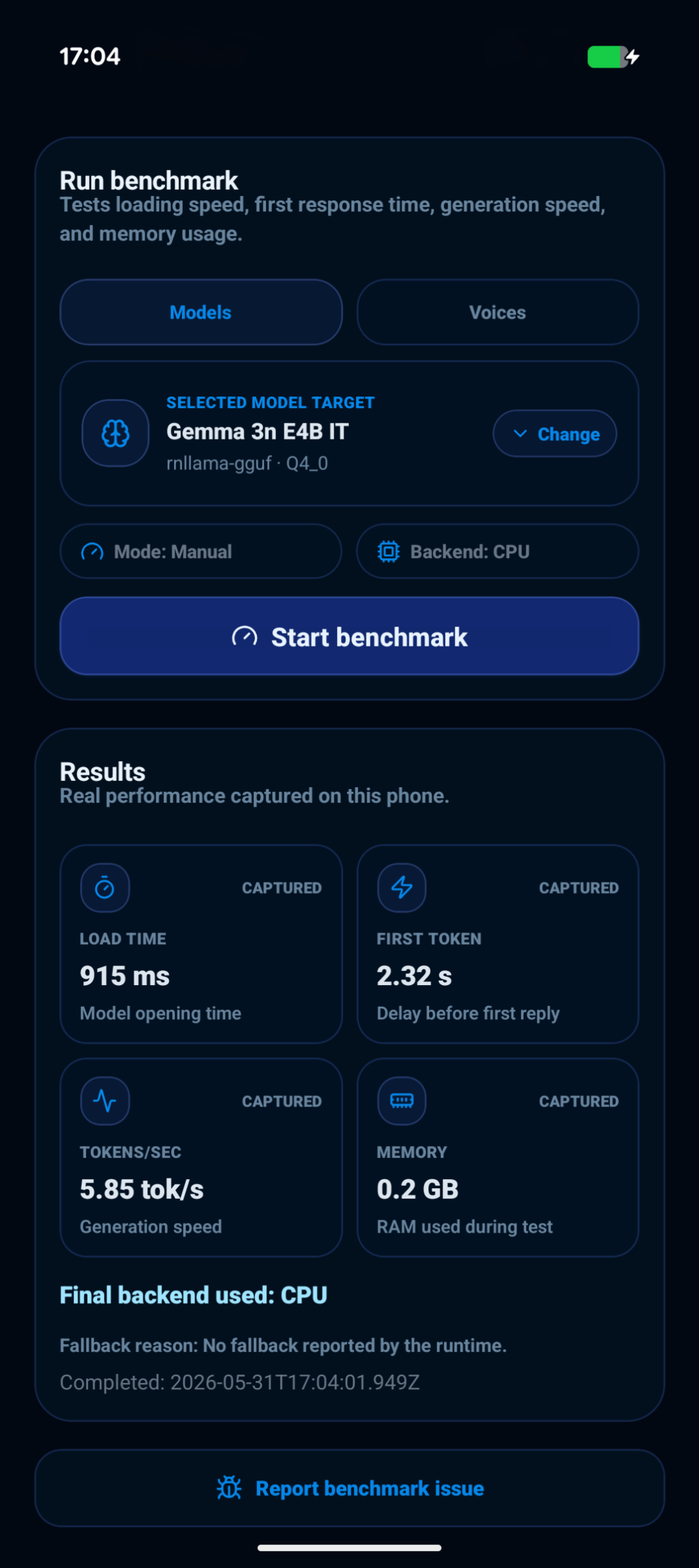
Modern Pixel proof showing CPU-safe local model execution.
Google Pixel 9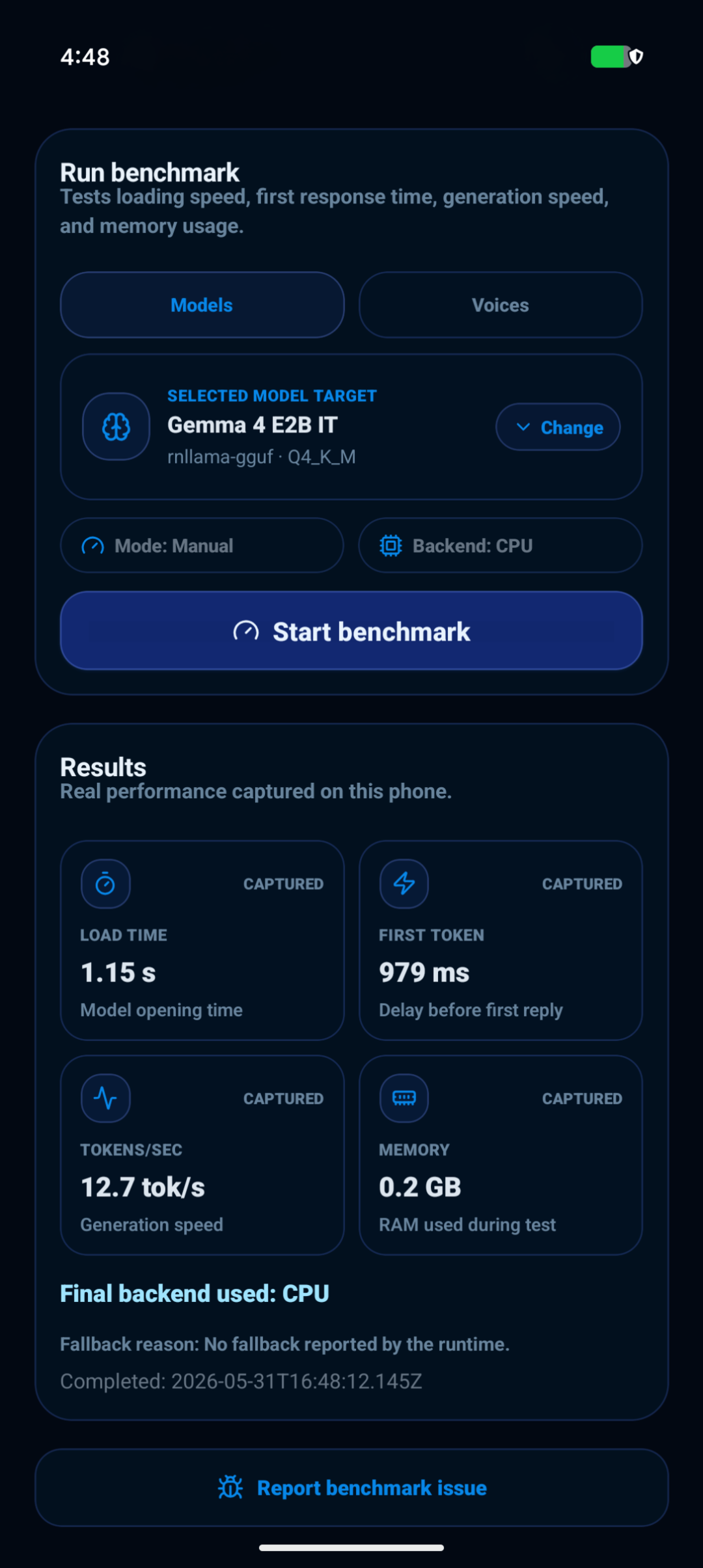
Flagship proof for Gemma-class local text models on CPU.
Google Pixel 10 Pro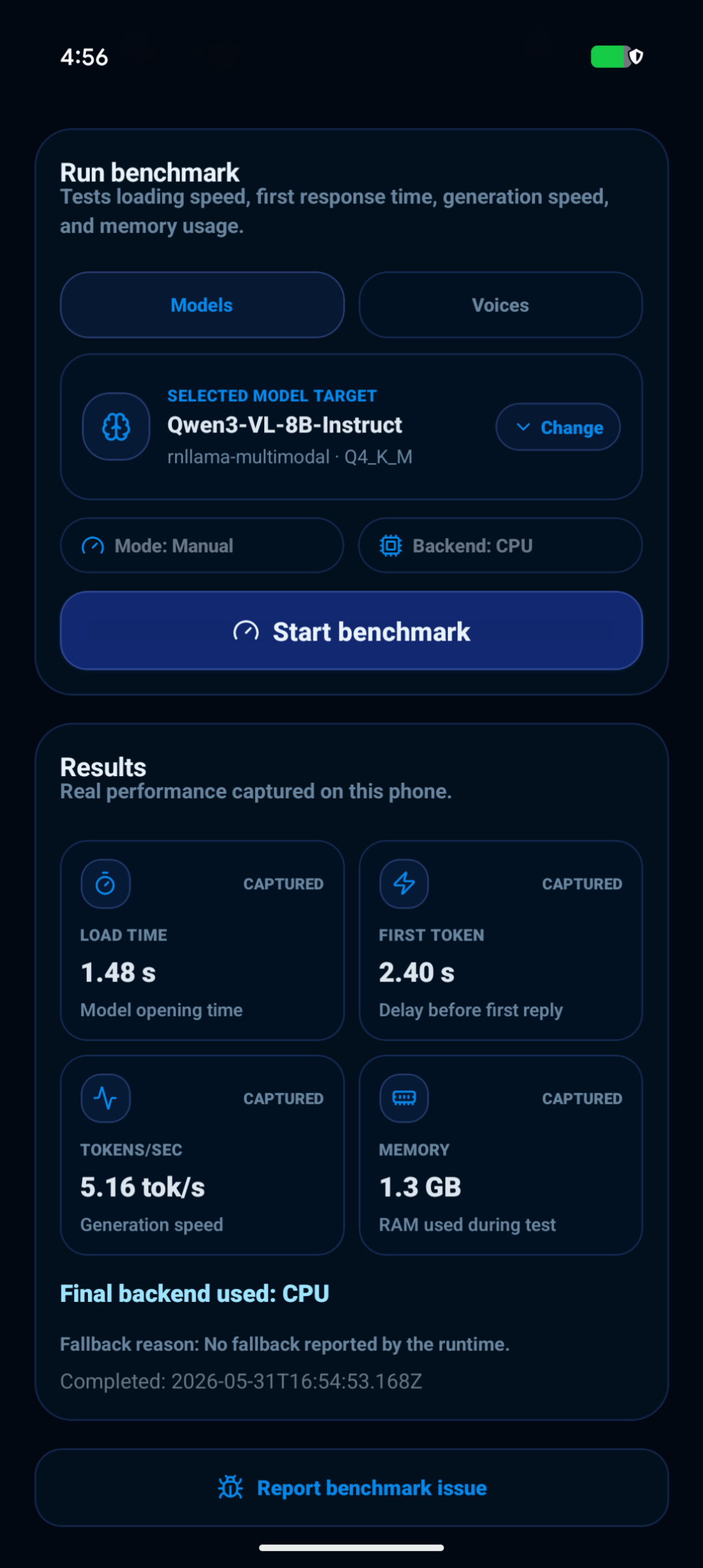
Vision-model benchmark proof using Qwen3 VL on a high-end Android phone.
Google Pixel 10 ProOpenCL is shown only where Q17 AI completed real benchmark proof. Devices that are unstable use safer fallback paths.
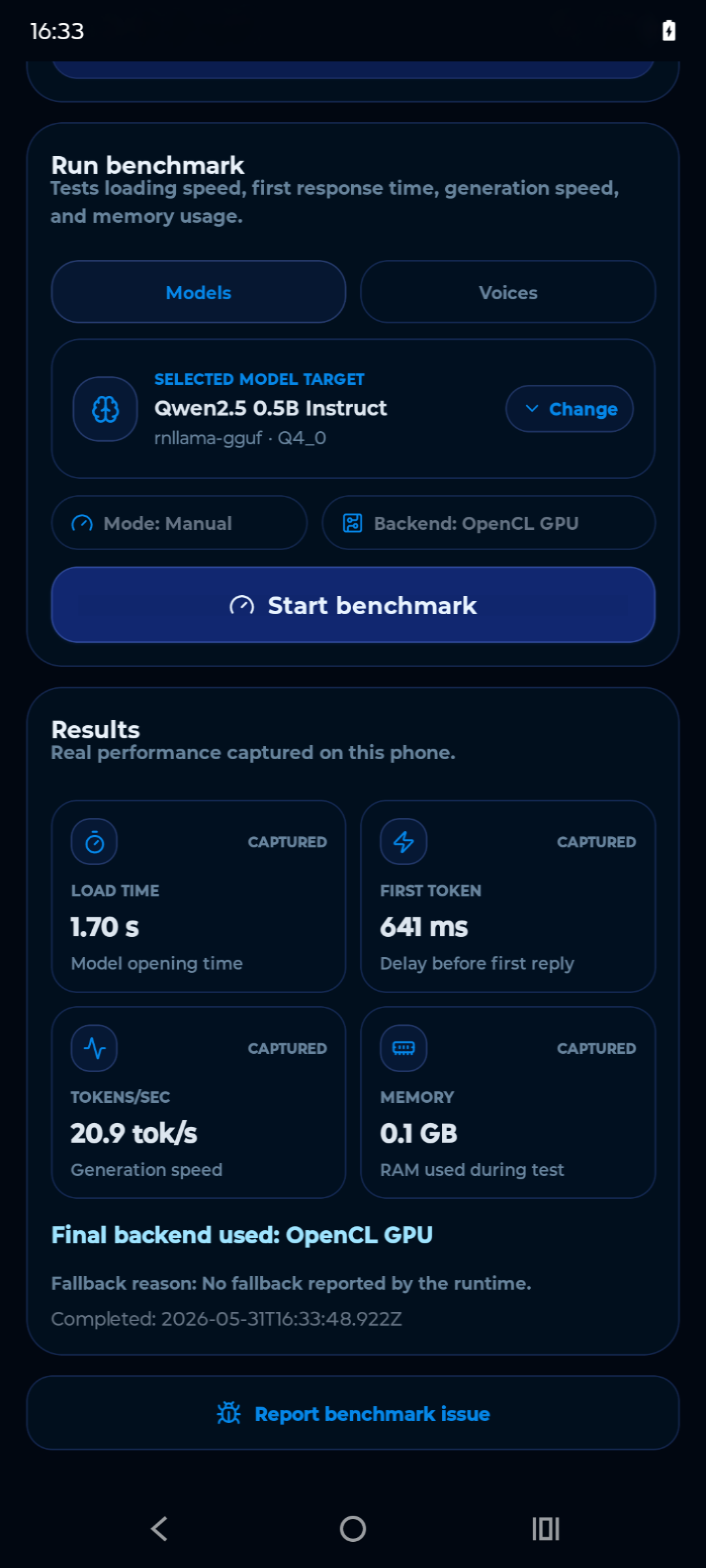
Backend proof showing OpenCL as a practical acceleration path where stable.
Moto Edge 50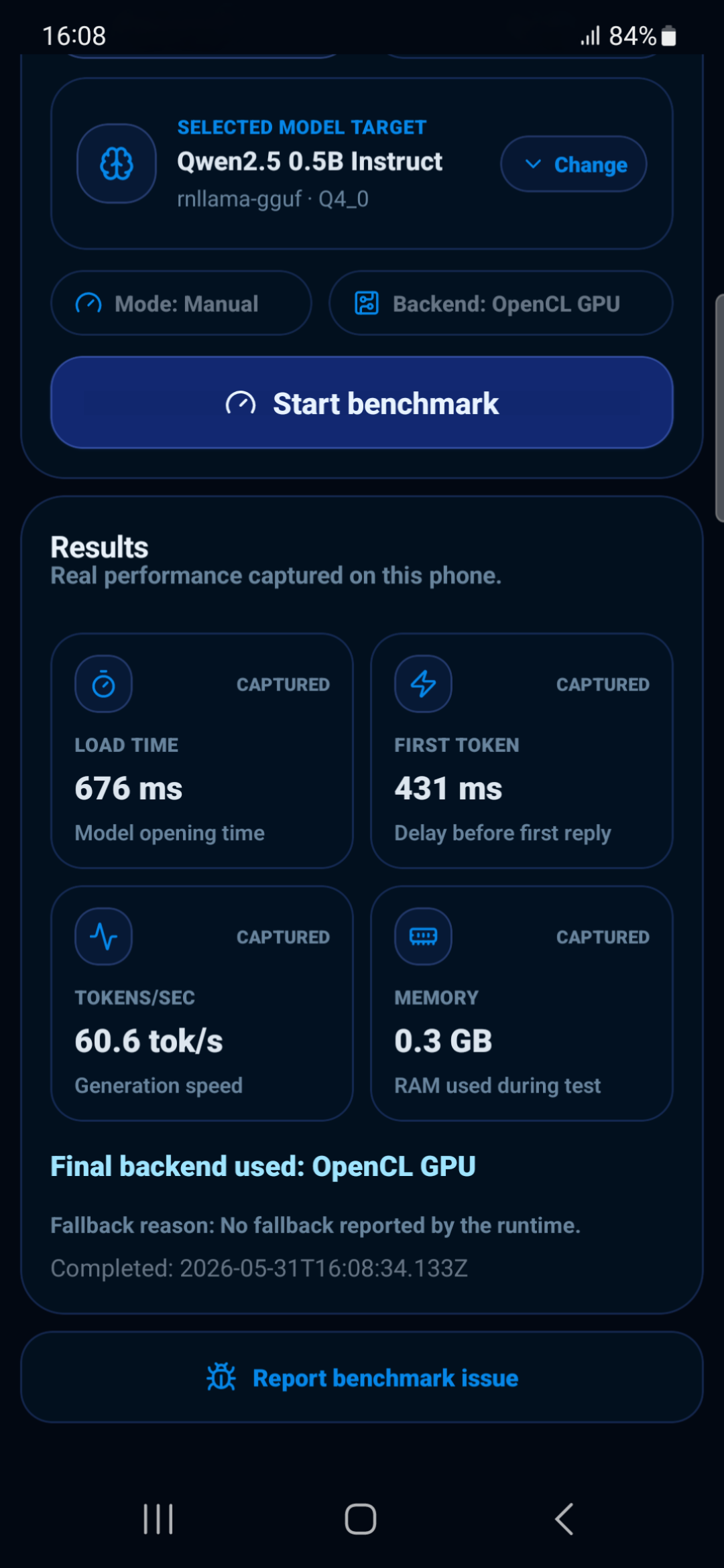
OpenCL benchmark proof on Samsung Adreno hardware.
Galaxy S23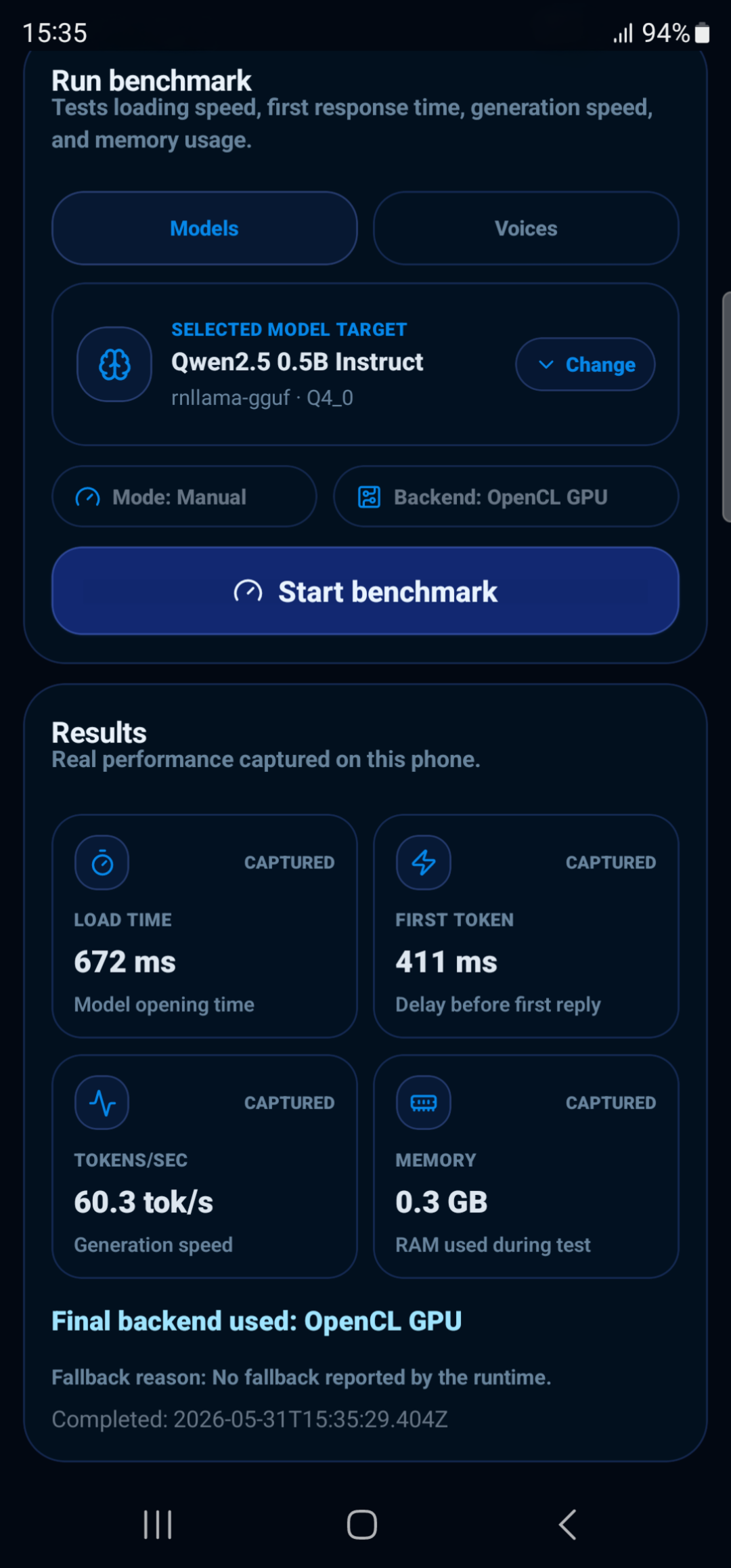
OpenCL benchmark proof captured before comparing Vulkan acceleration.
Galaxy S23 UltraVulkan is experimental. These screenshots show capability screens and benchmark result screens where Q17 AI completed Vulkan runs and reported Vulkan as the final backend.
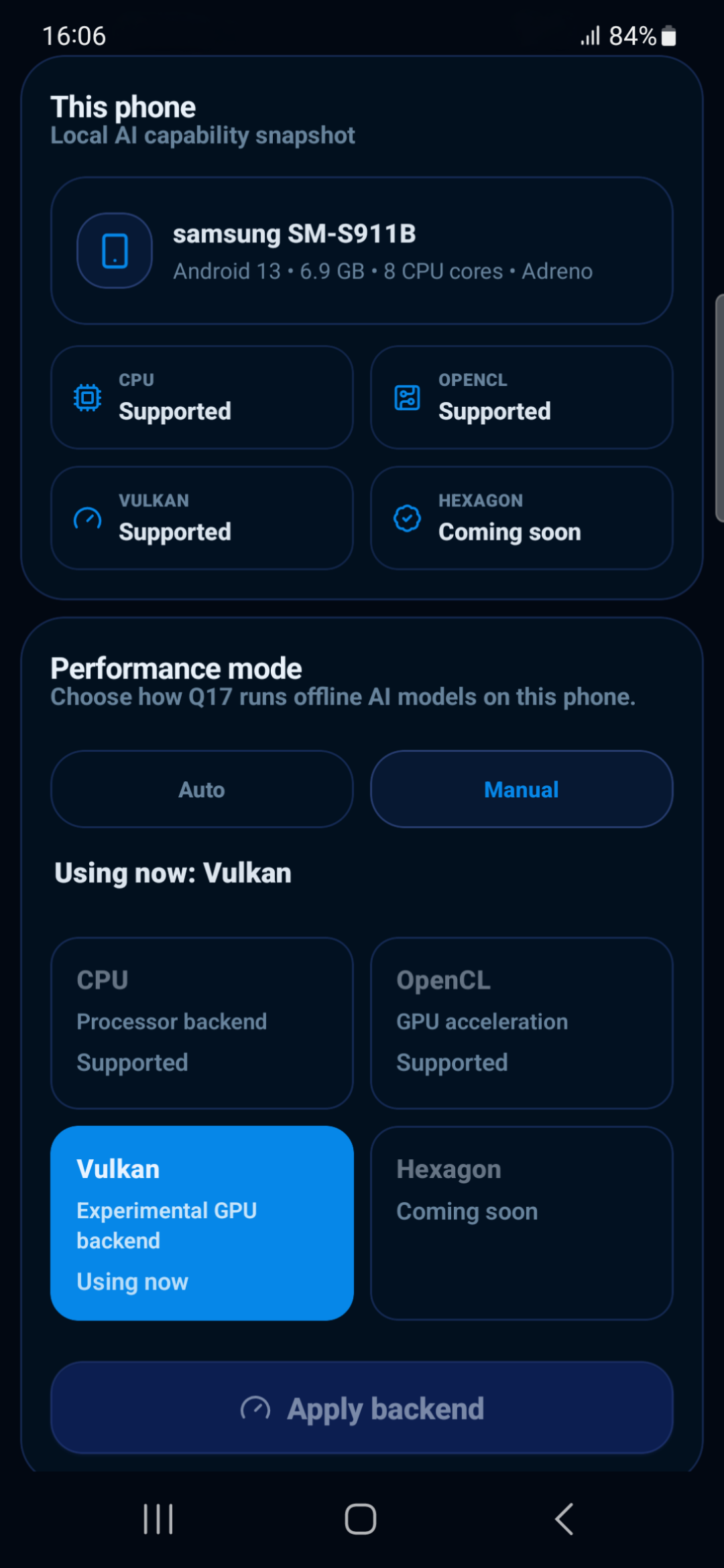
Q17 Private AI capability screen showing Vulkan selected on a validated phone.
Galaxy S23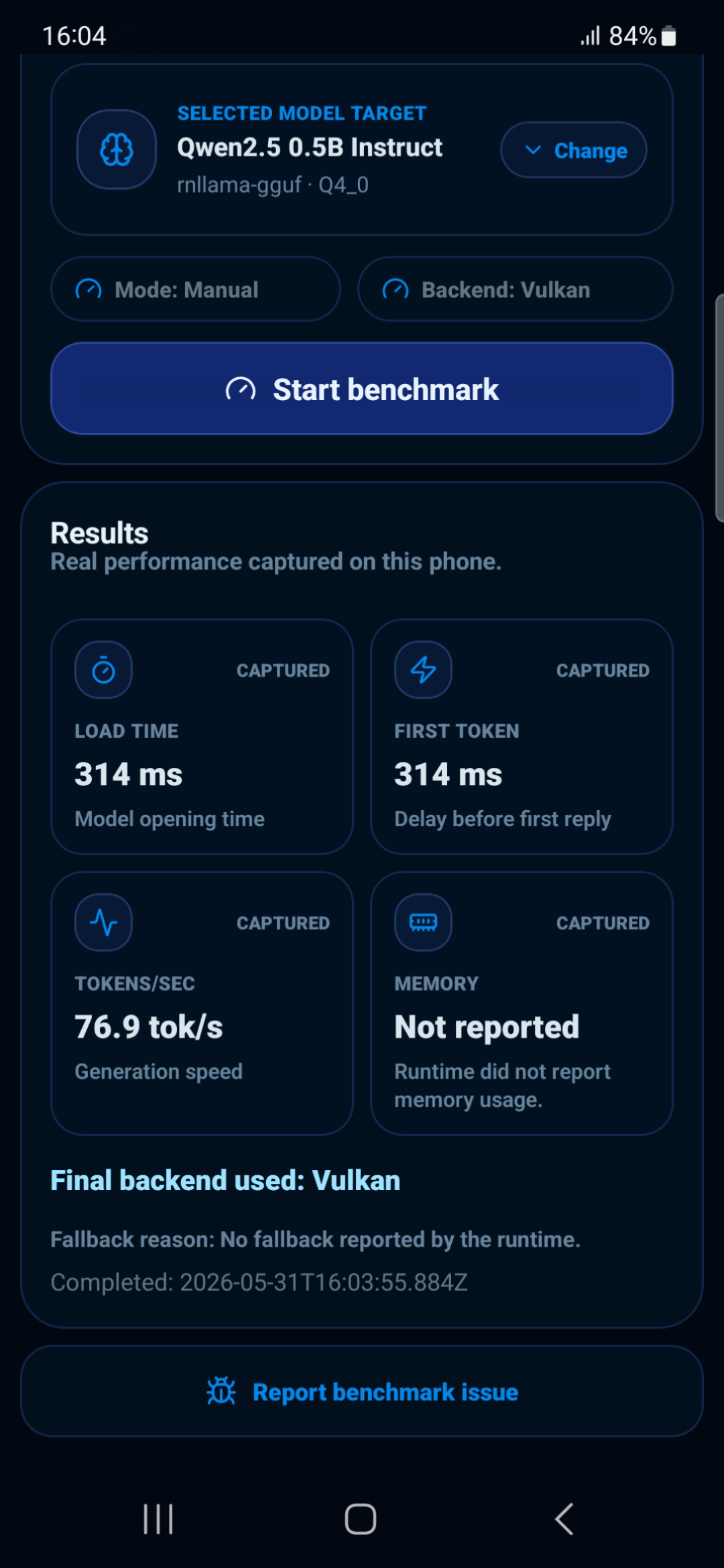
Benchmark result showing final backend used as Vulkan with no runtime fallback reported.
Galaxy S23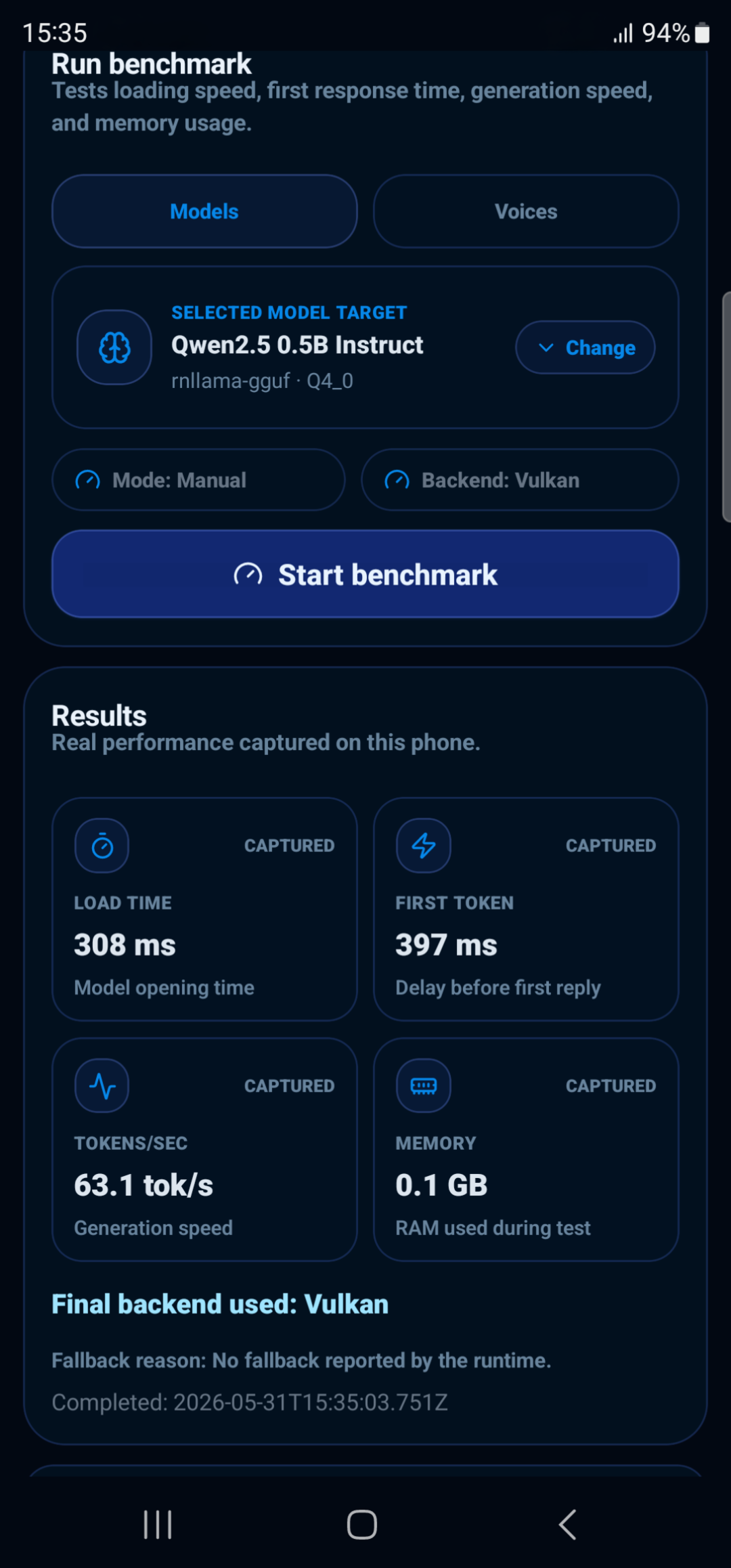
Validated Vulkan benchmark proof on Galaxy S23 Ultra.
Galaxy S23 Ultra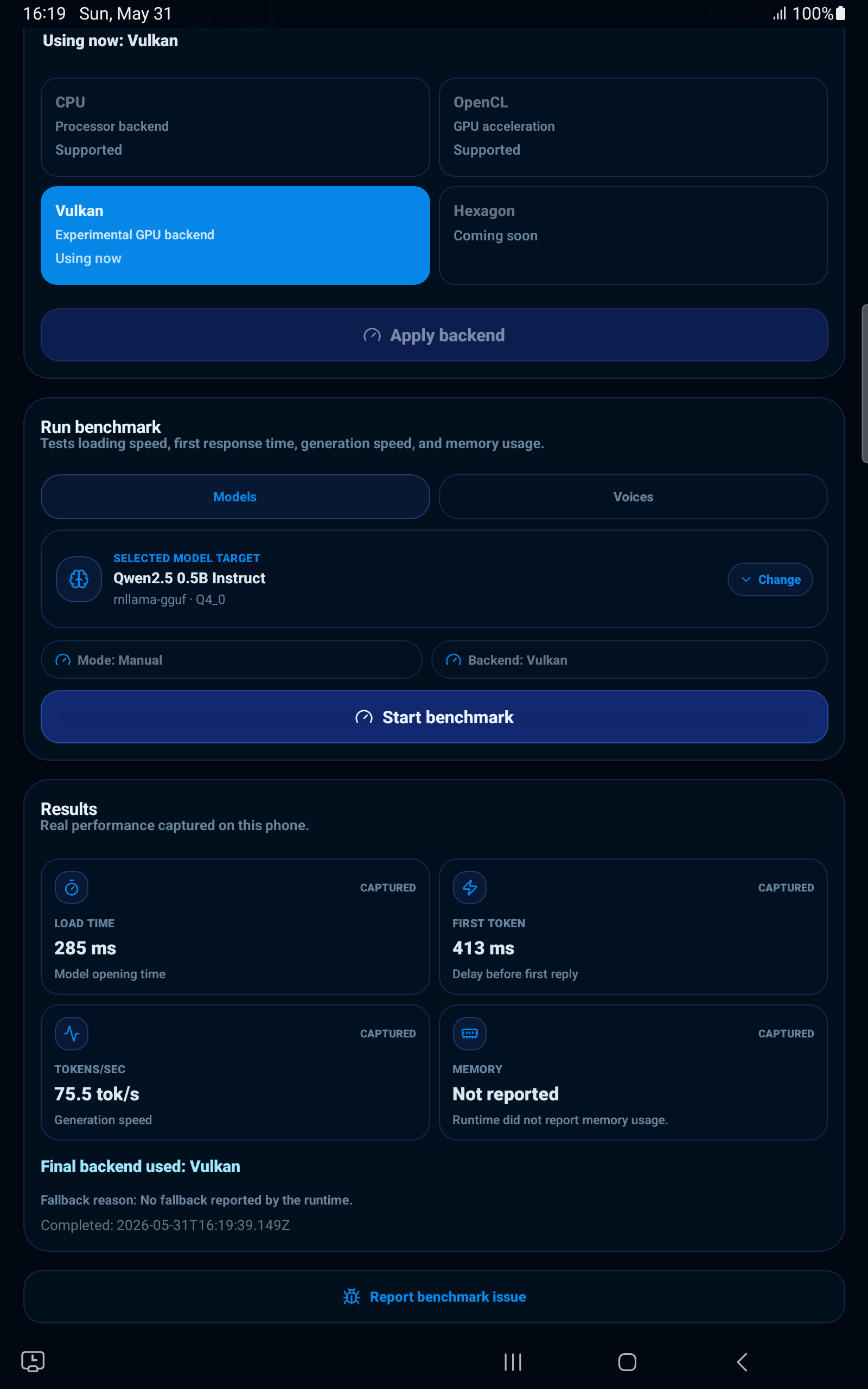
Tablet-class Vulkan capability proof inside Q17 Private AI.
Galaxy Tab S9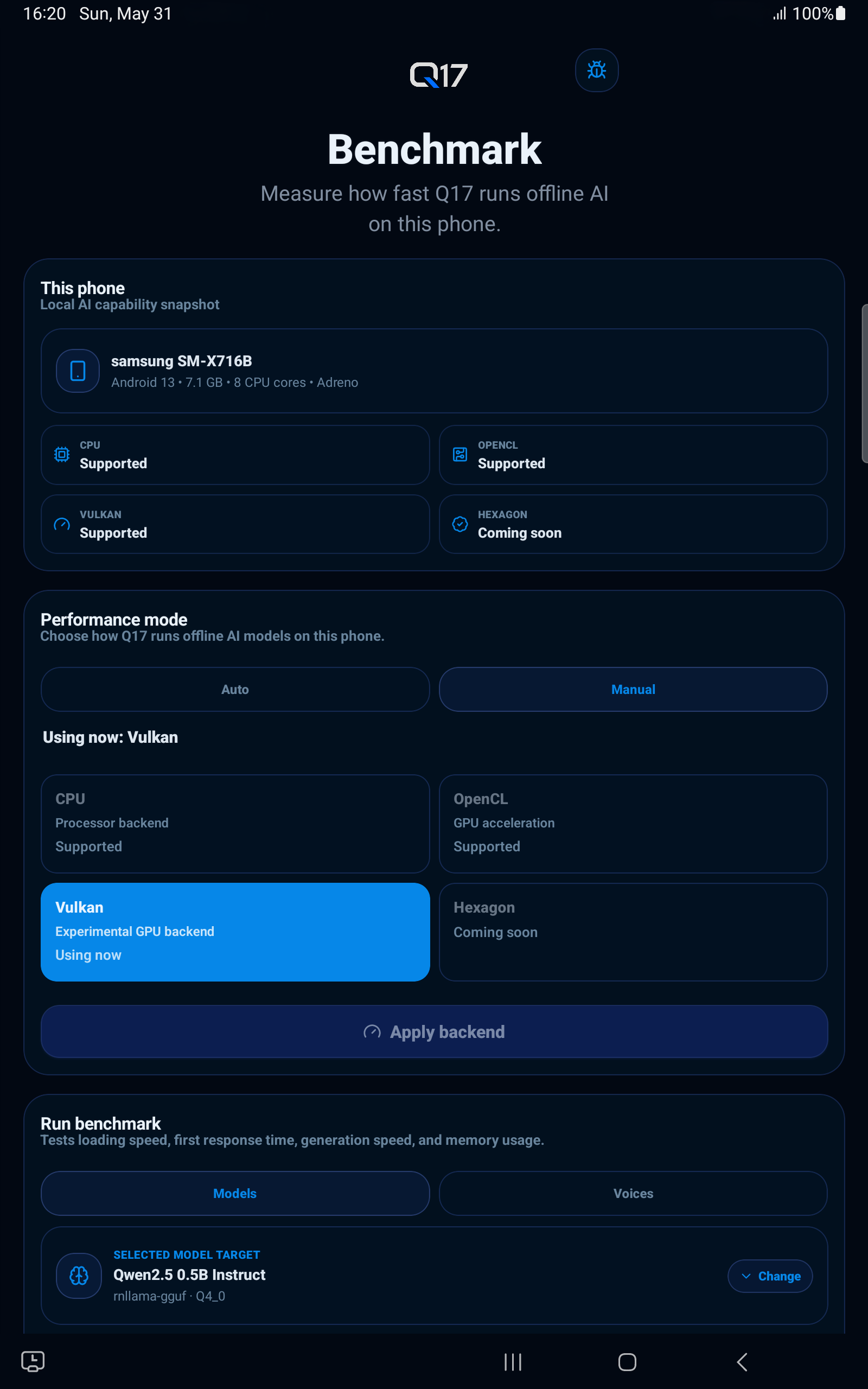
Tablet benchmark result showing Vulkan completion.
Galaxy Tab S9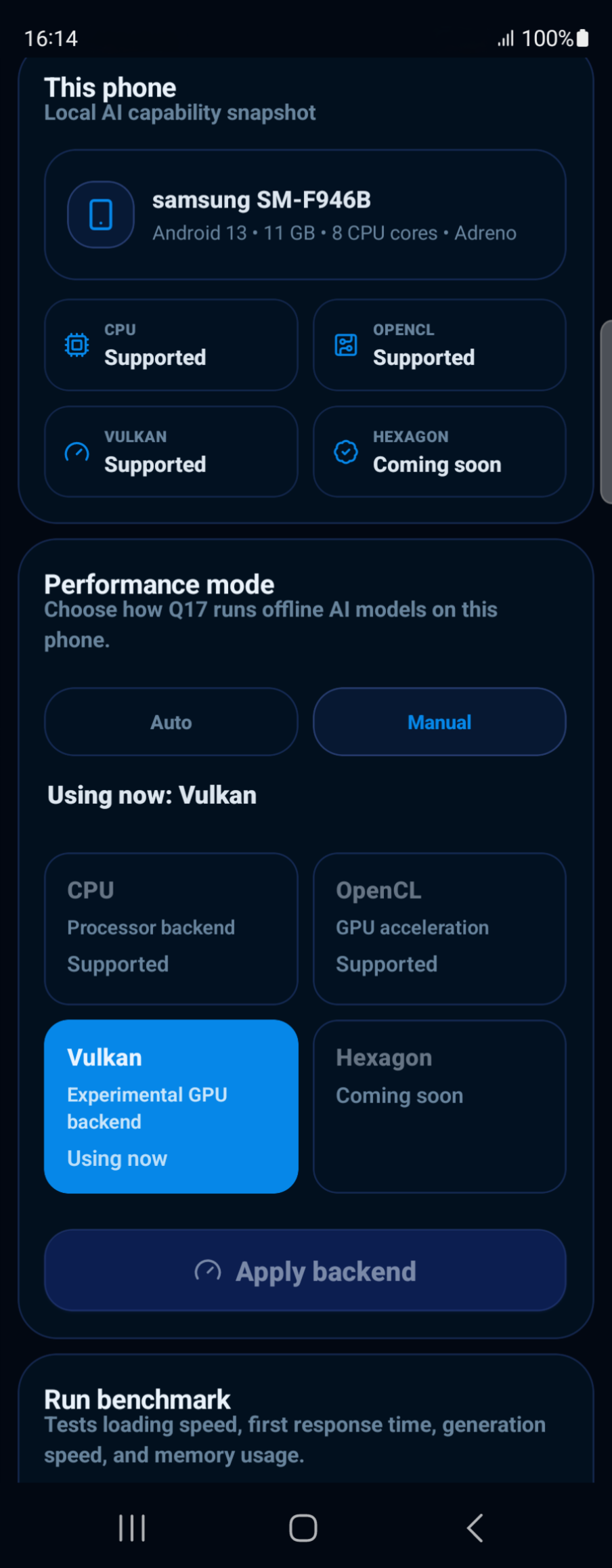
Foldable device capability proof showing Q17 Private AI selecting Vulkan.
Galaxy Z Fold 5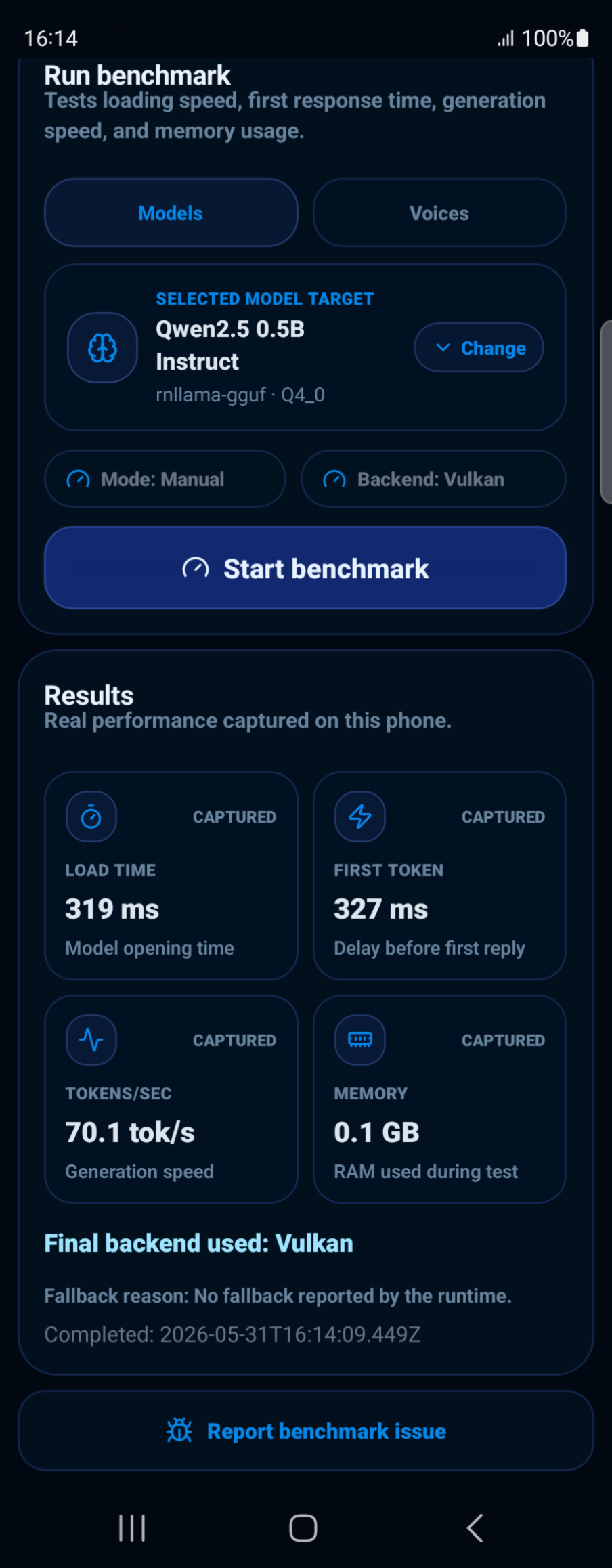
Foldable Vulkan benchmark proof captured inside Q17 Private AI.
Galaxy Z Fold 5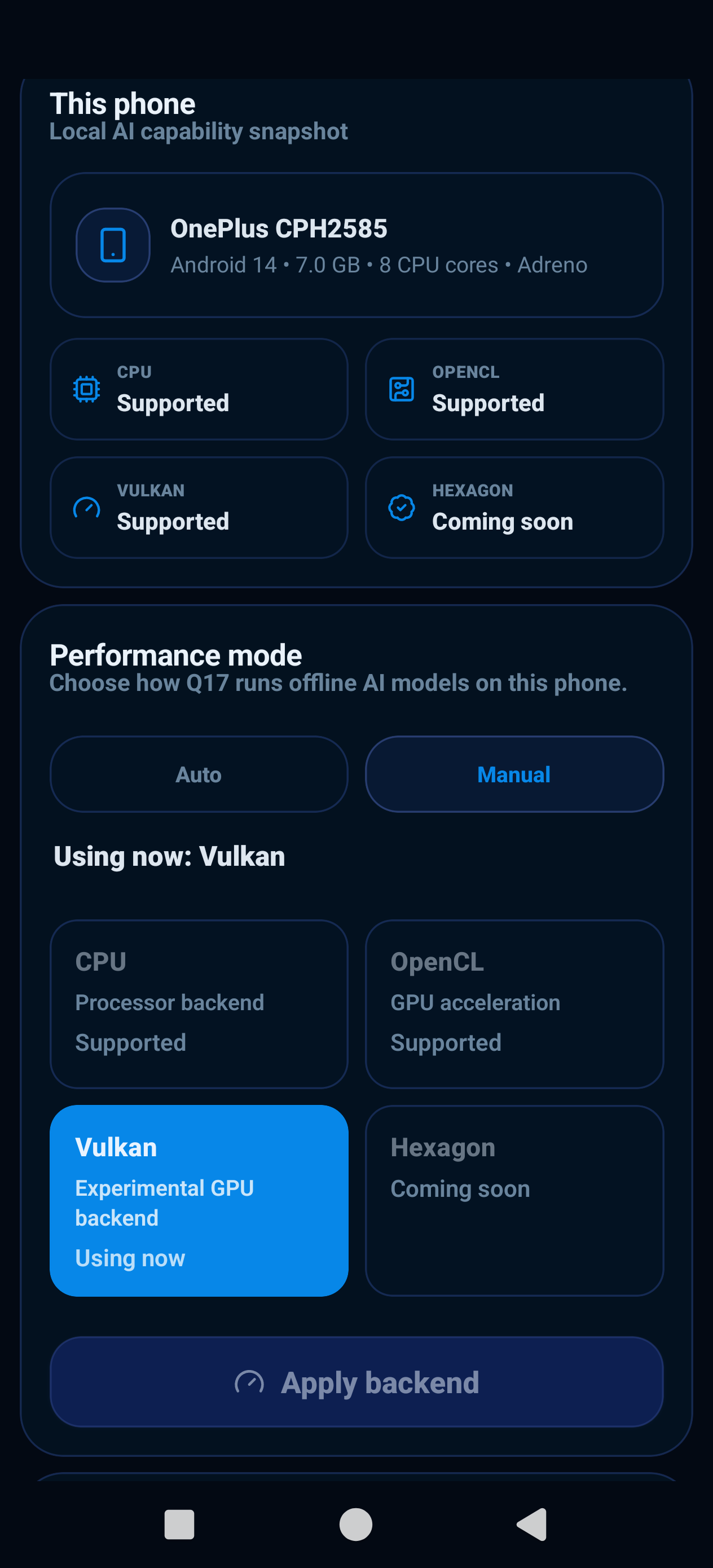
Non-Samsung Vulkan capability proof on OnePlus 12R.
OnePlus 12R / CPH2585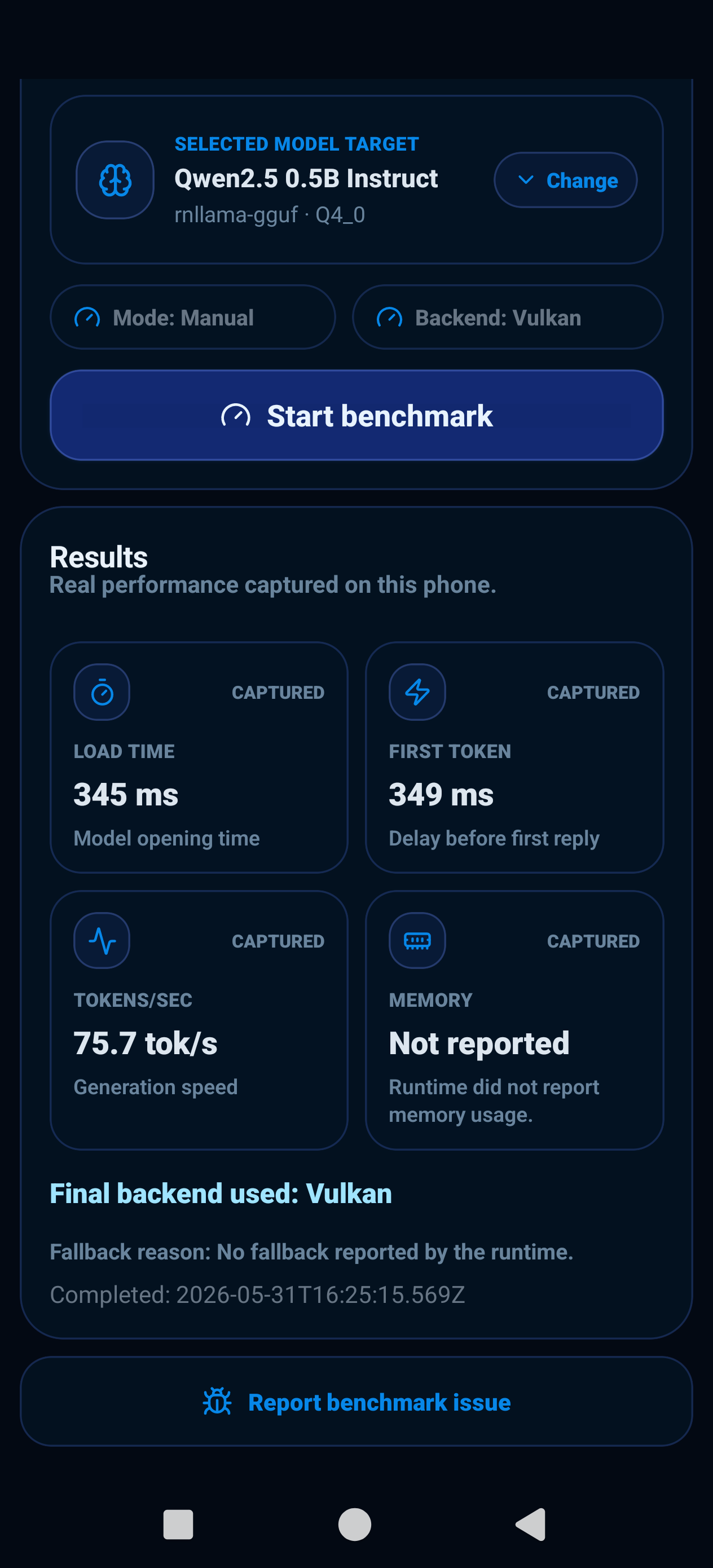
Validated Vulkan benchmark result on OnePlus 12R.
OnePlus 12R / CPH2585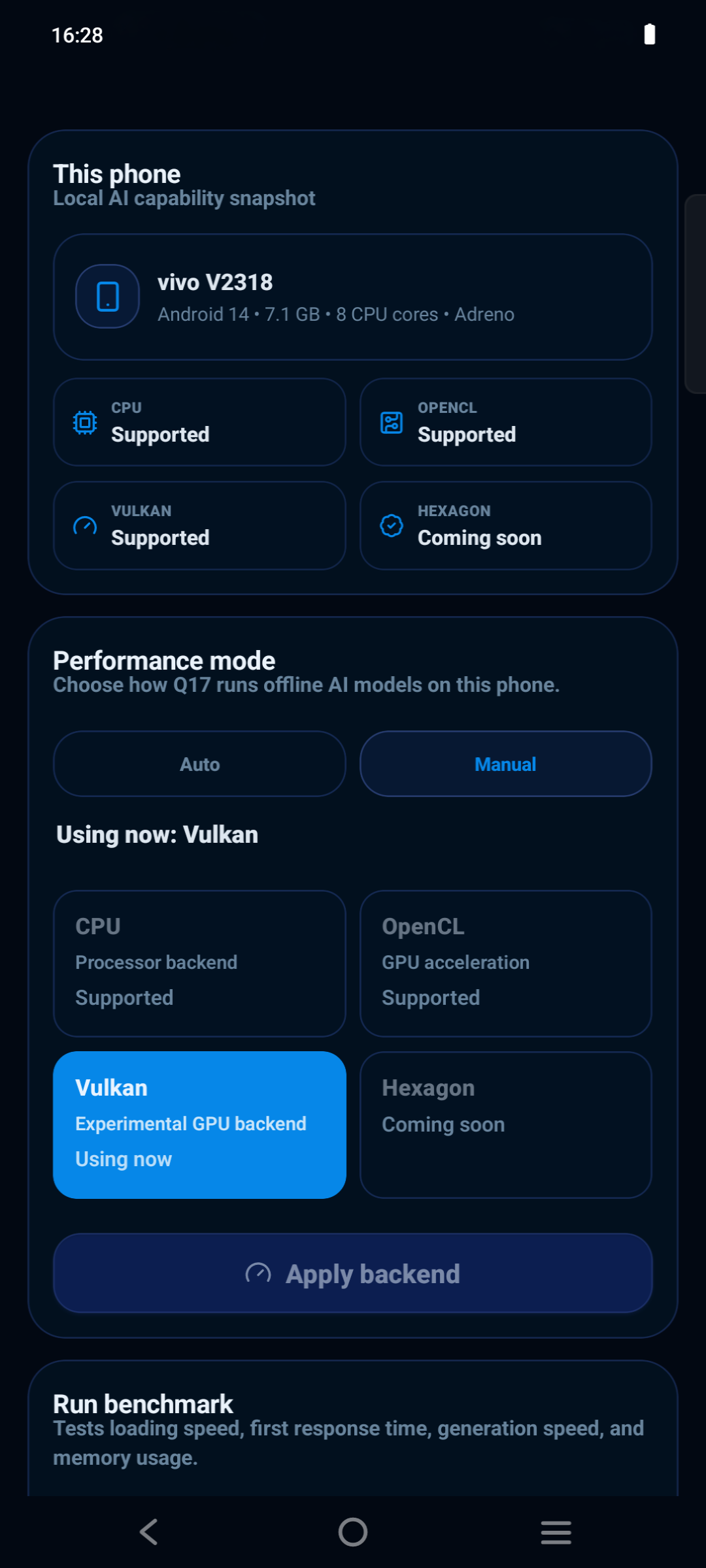
Vivo capability proof showing the validated Vulkan path.
Vivo V30 / V2318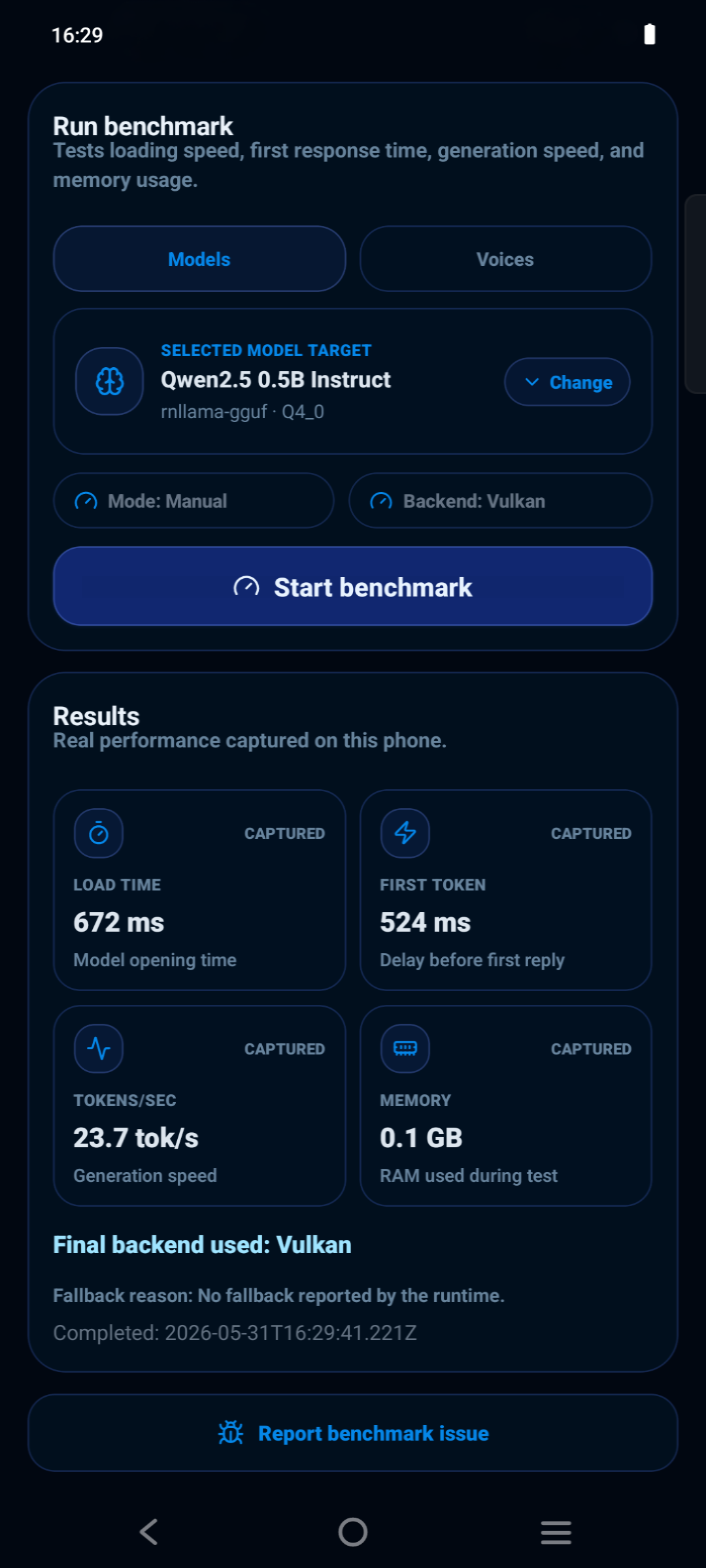
Validated Vivo Vulkan benchmark proof captured on-device.
Vivo V30 / V2318Q17 Private AI also includes local image-generation workflows. These screenshots show generated results and Image Studio screens across multiple phones.
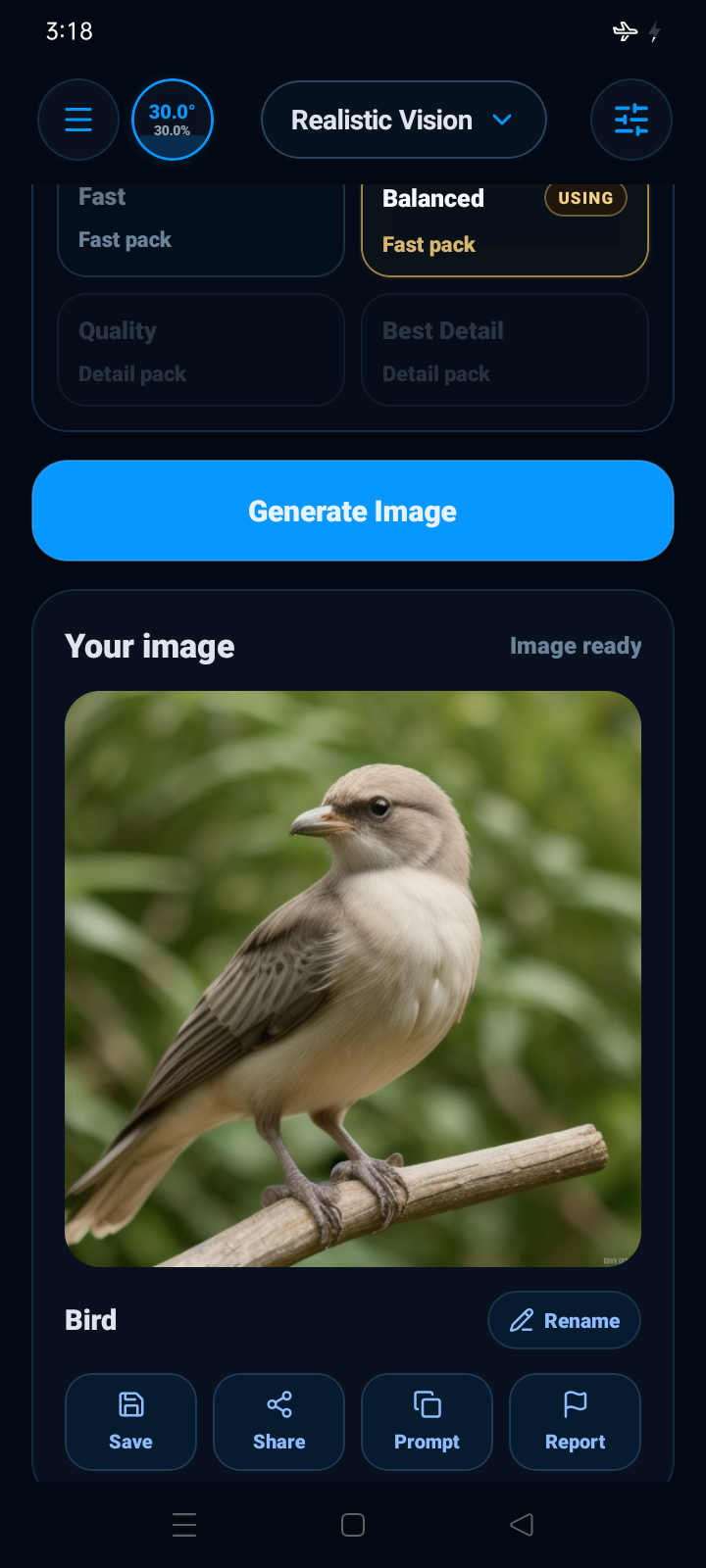
Local image-generation proof on budget Android hardware.
Realme C3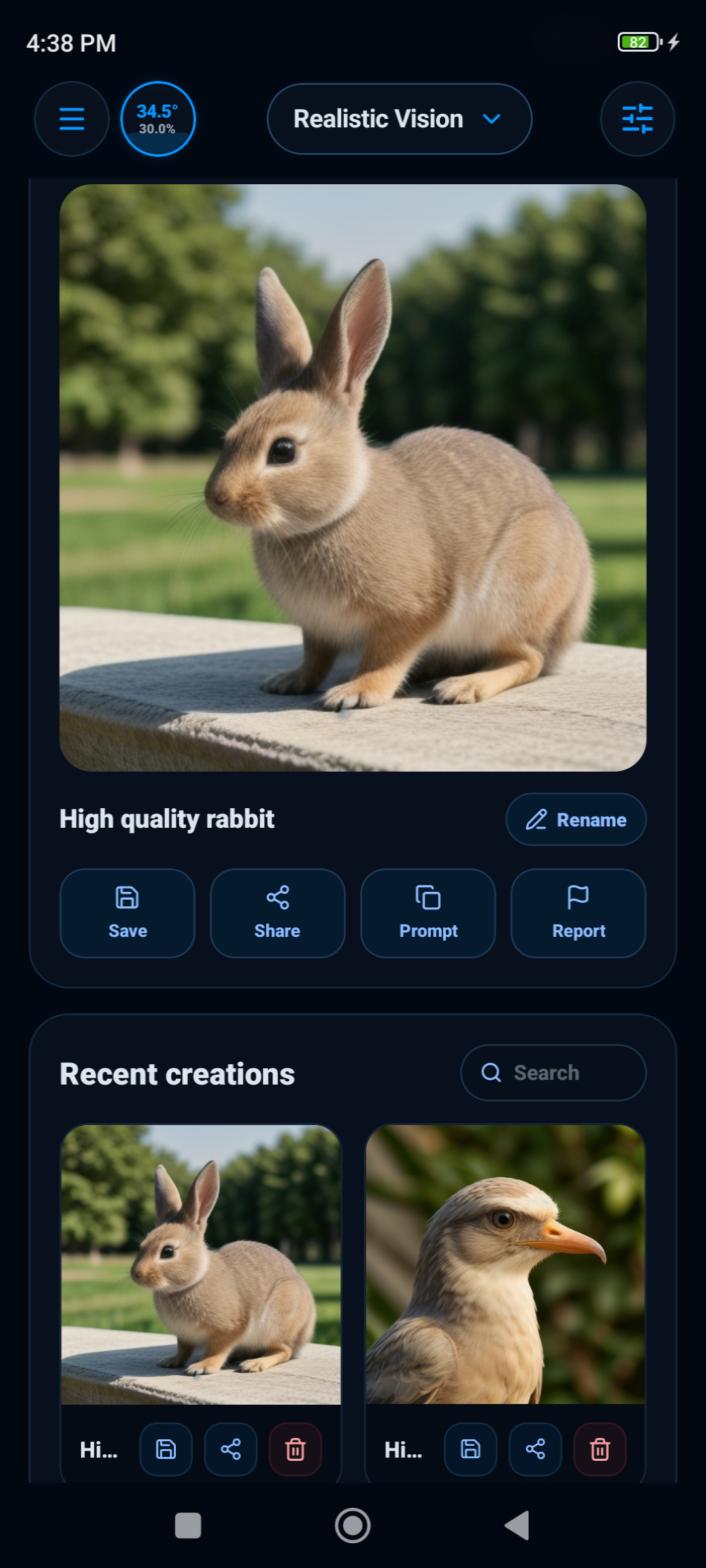
Gallery proof showing repeated image-generation results on POCO hardware.
POCO M2 Pro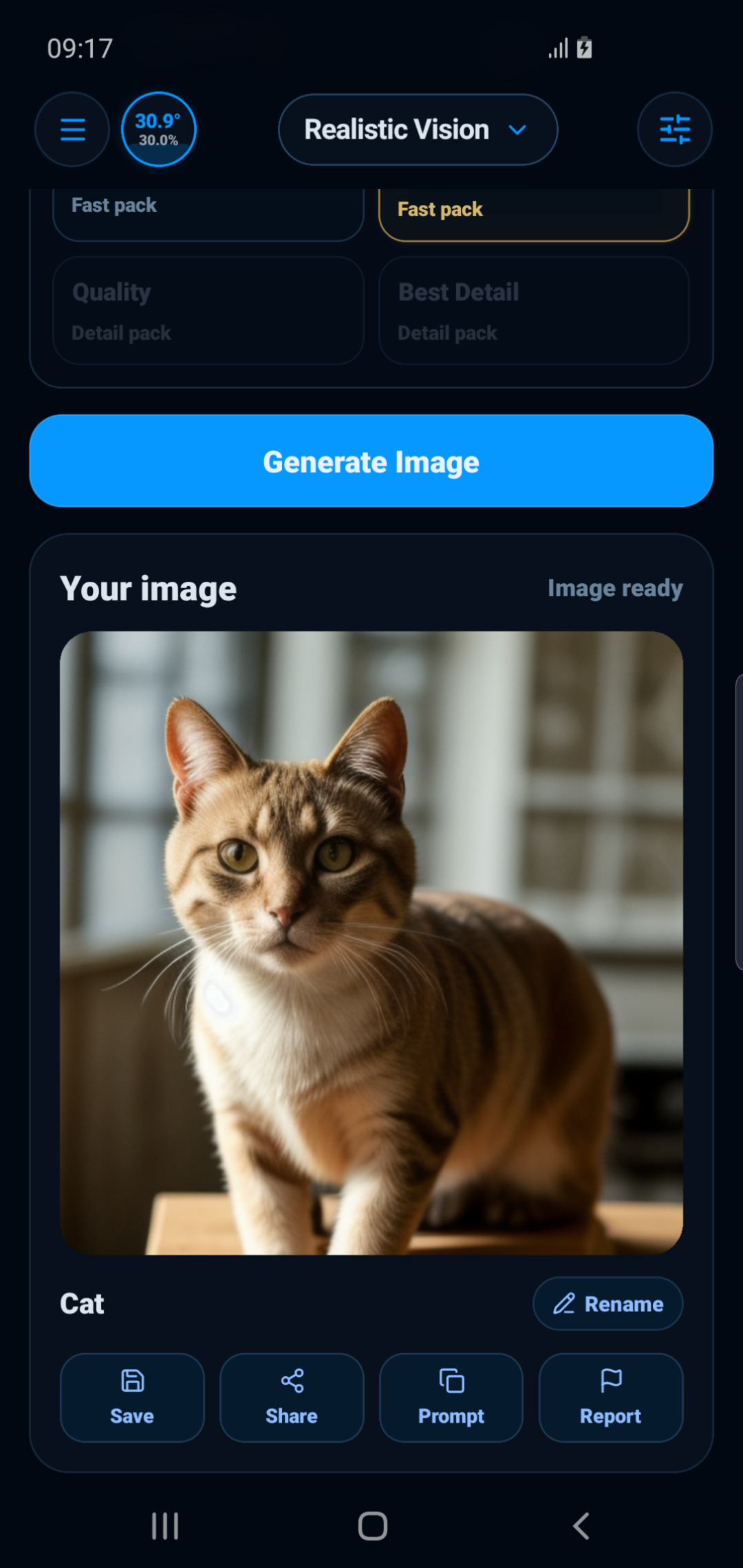
Image-generation proof on older Android hardware.
Samsung S10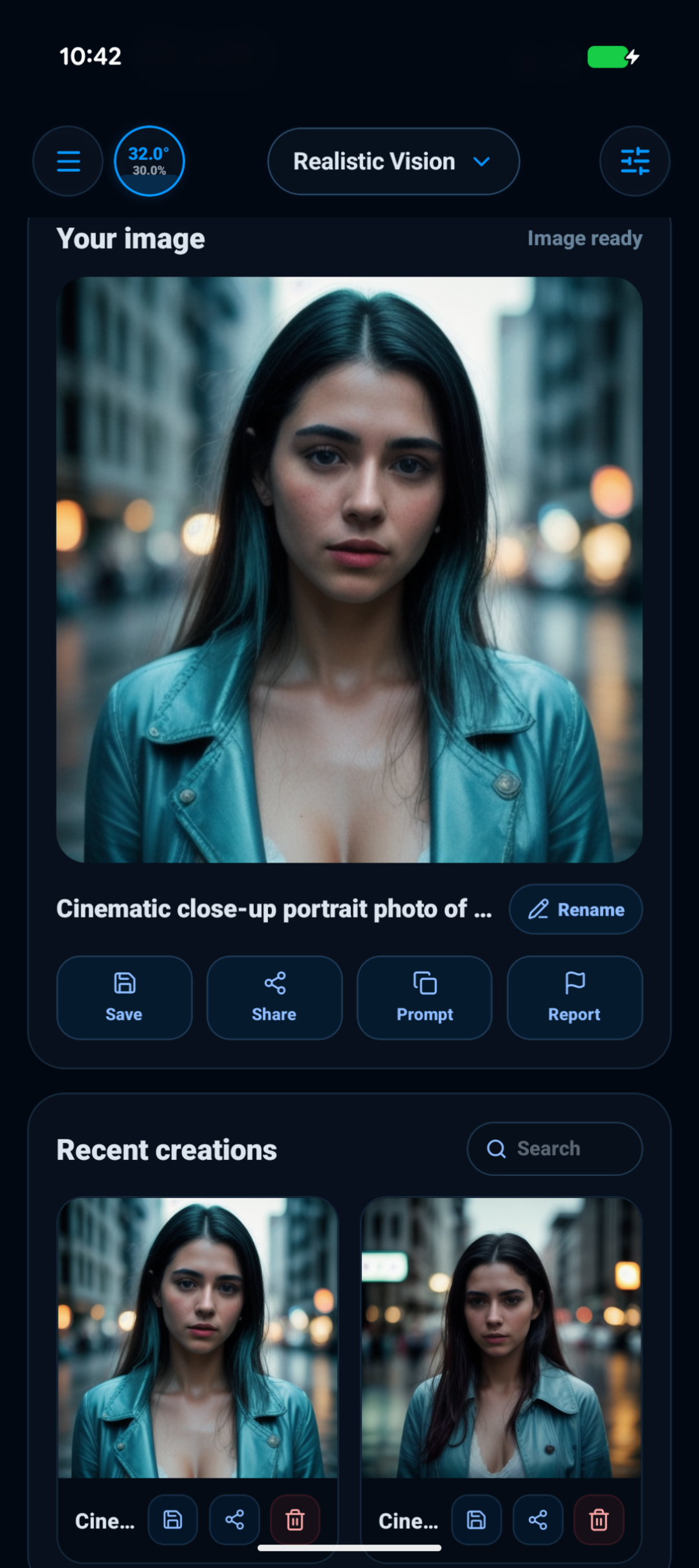
Local image result generated through Q17 Image Studio on Pixel hardware.
Google Pixel 9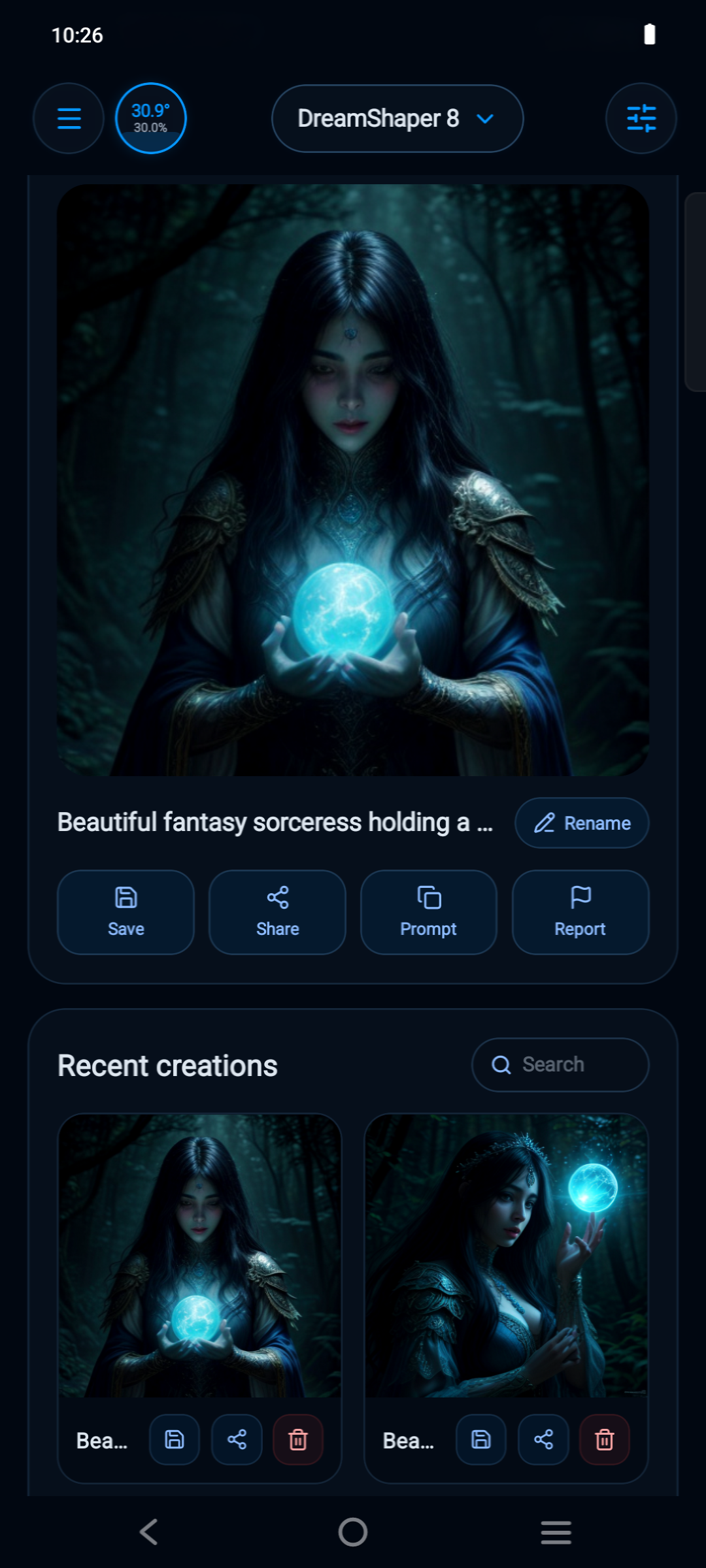
Image-generation proof on Vivo hardware.
Vivo V30These proofs show image understanding, PDF reading, attachments, voice mode, and local chat workflows inside the same Android app.
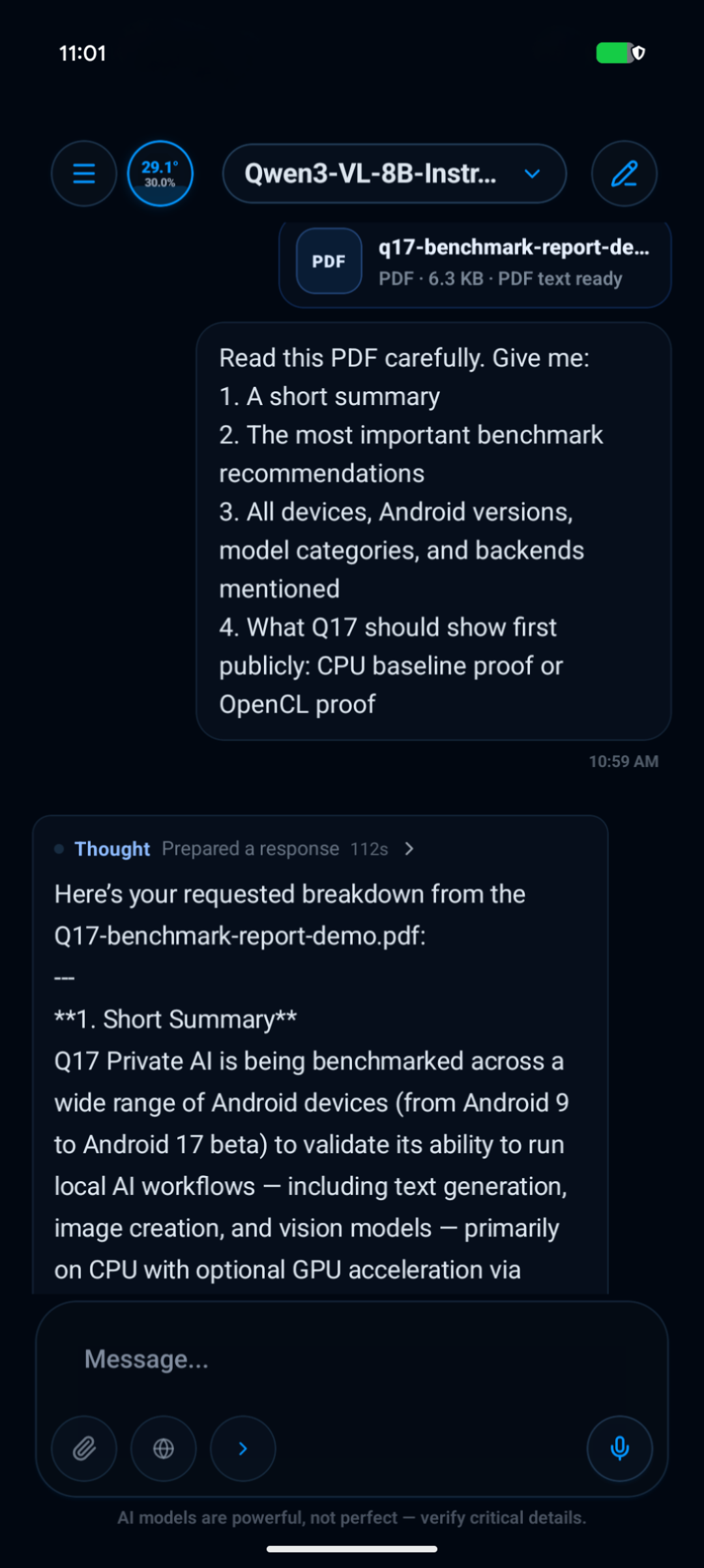
PDF attachment proof showing Q17 Private AI reading and responding from a document.
Google Pixel 9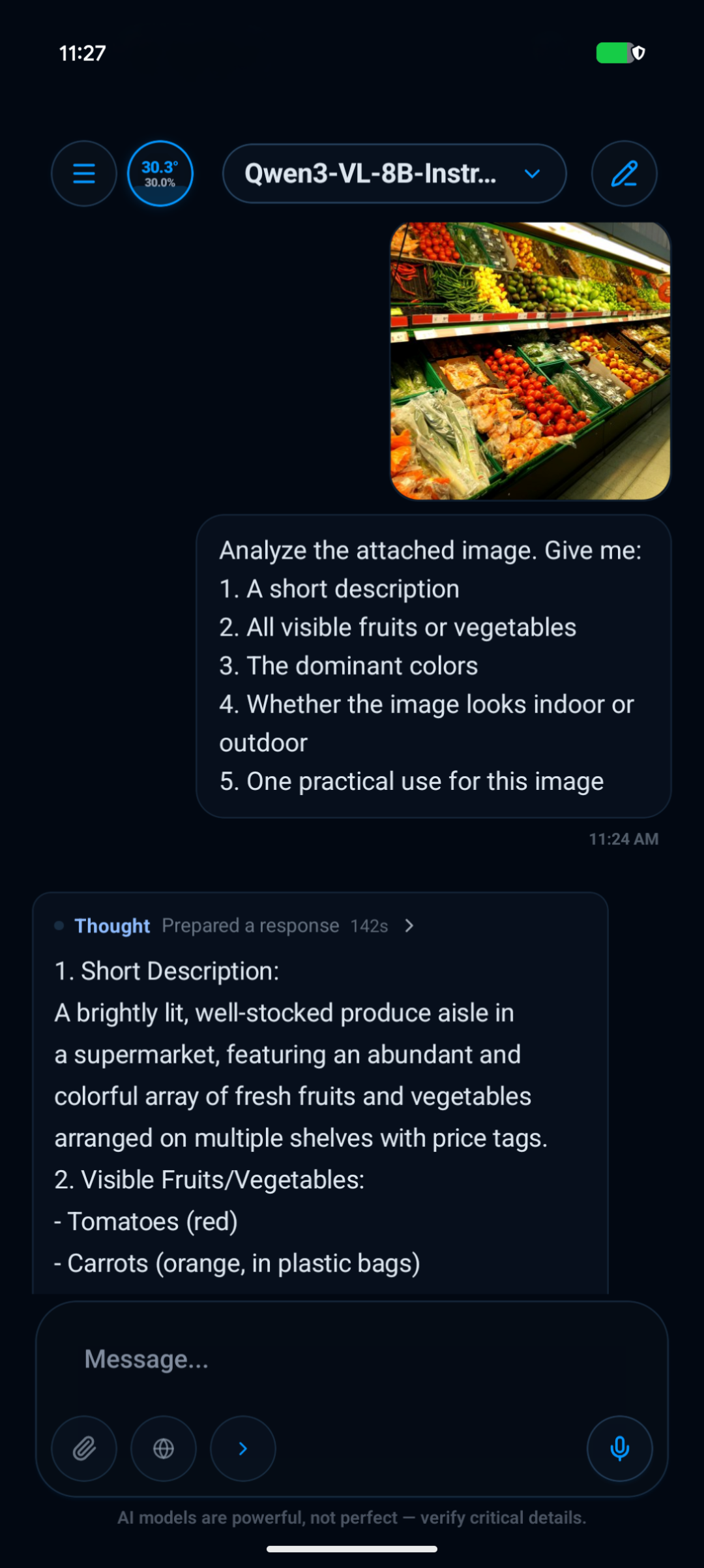
Image-understanding proof using an attached image and a vision model.
Google Pixel 9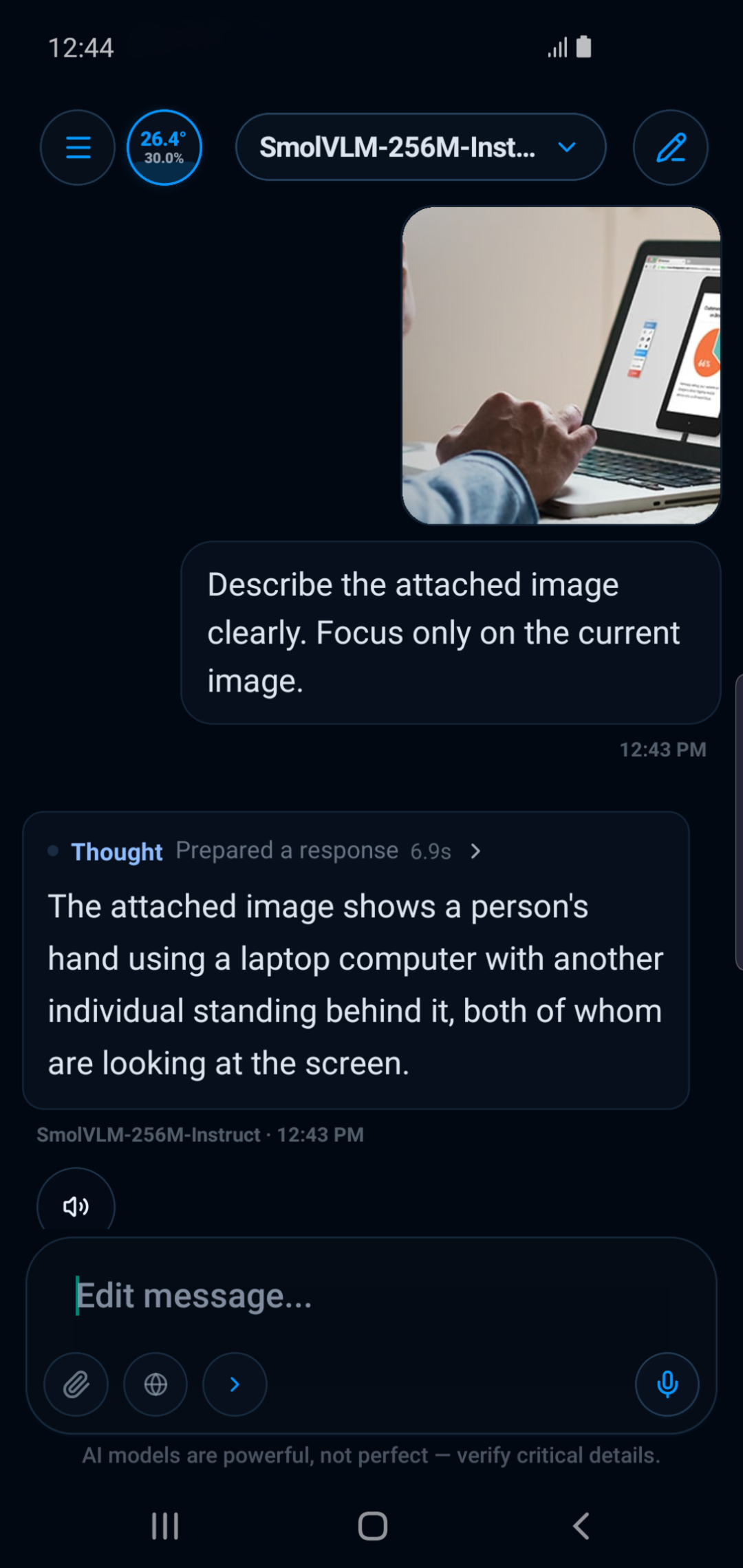
Older phone vision proof using a lightweight VLM.
Samsung S10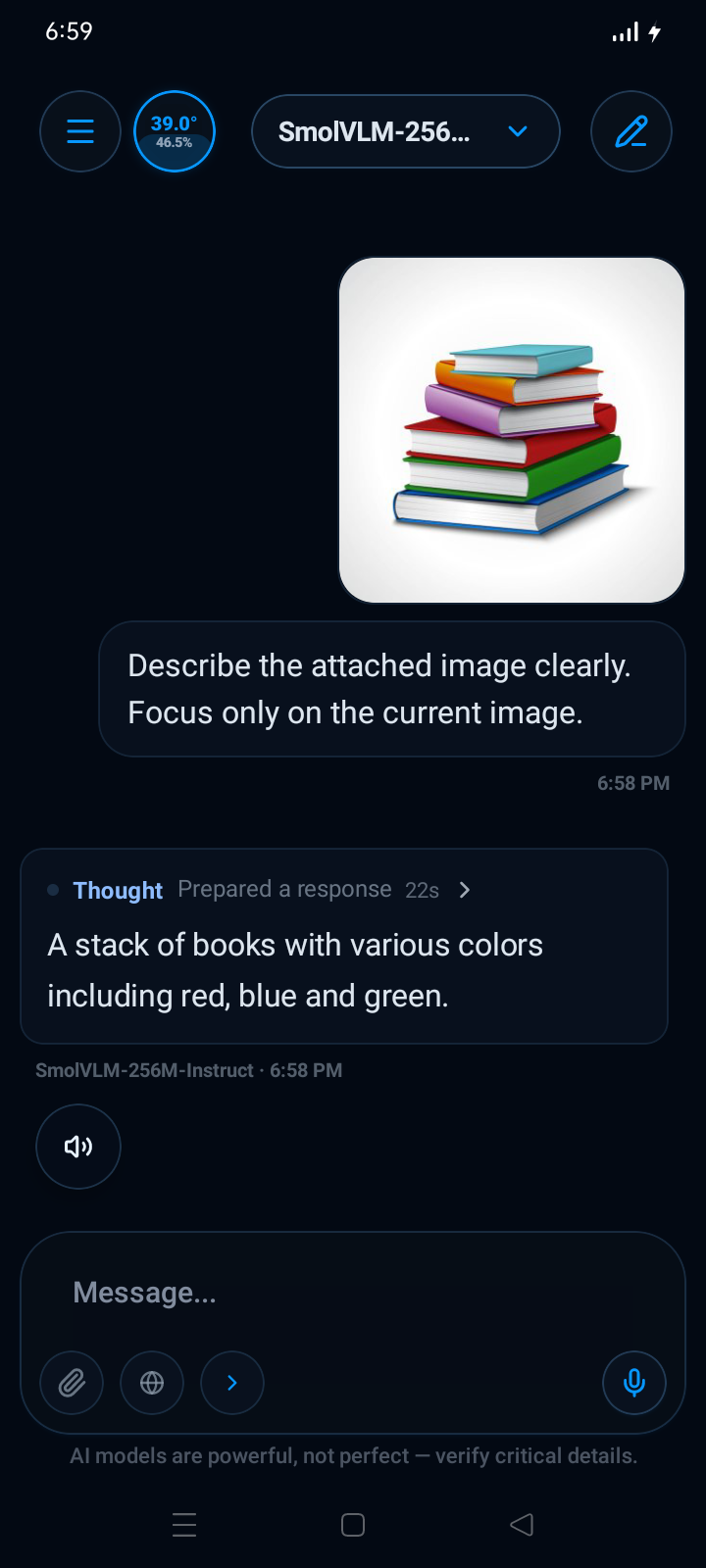
Budget-phone proof showing lightweight image understanding.
Realme C3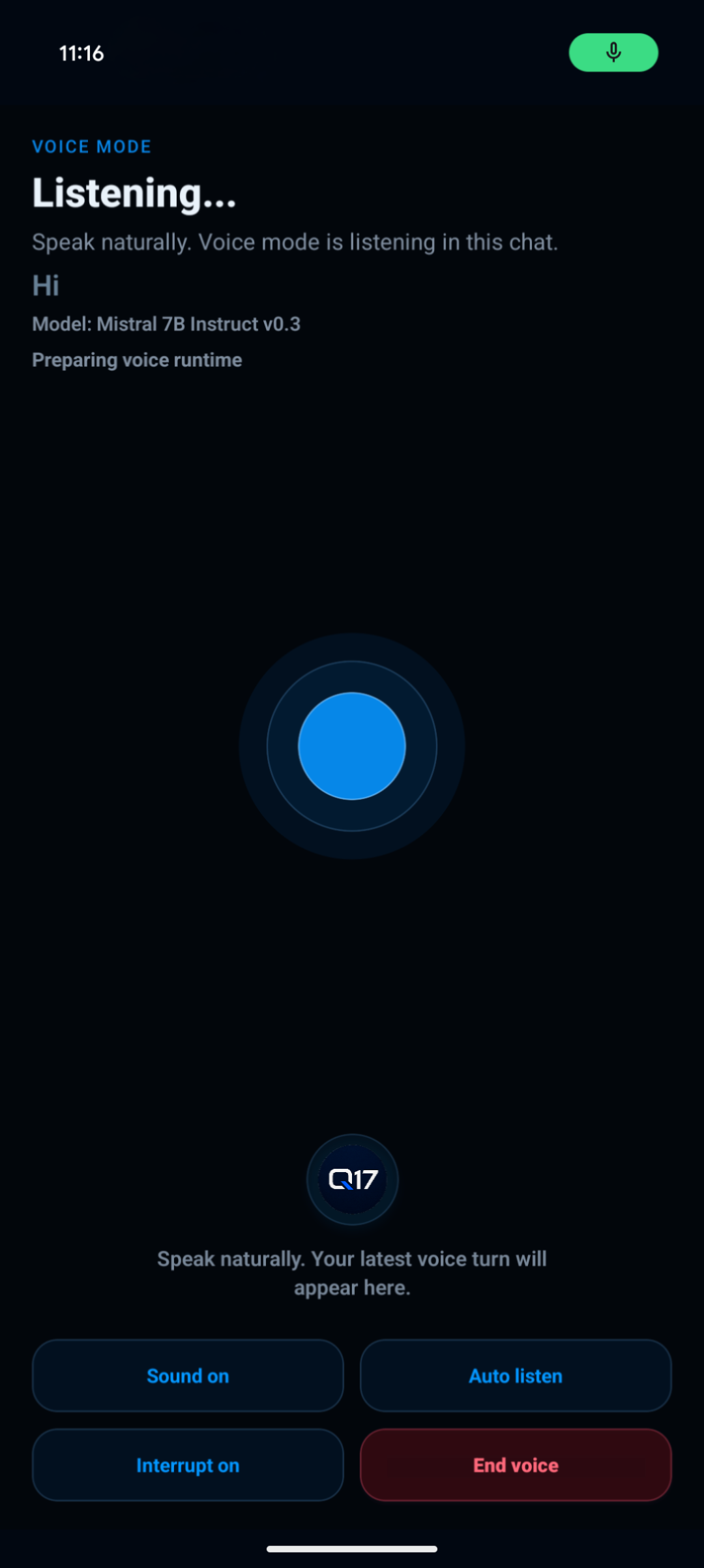
Voice-mode interface proof showing Q17 Private AI mobile assistant workflow.
Google Pixel 9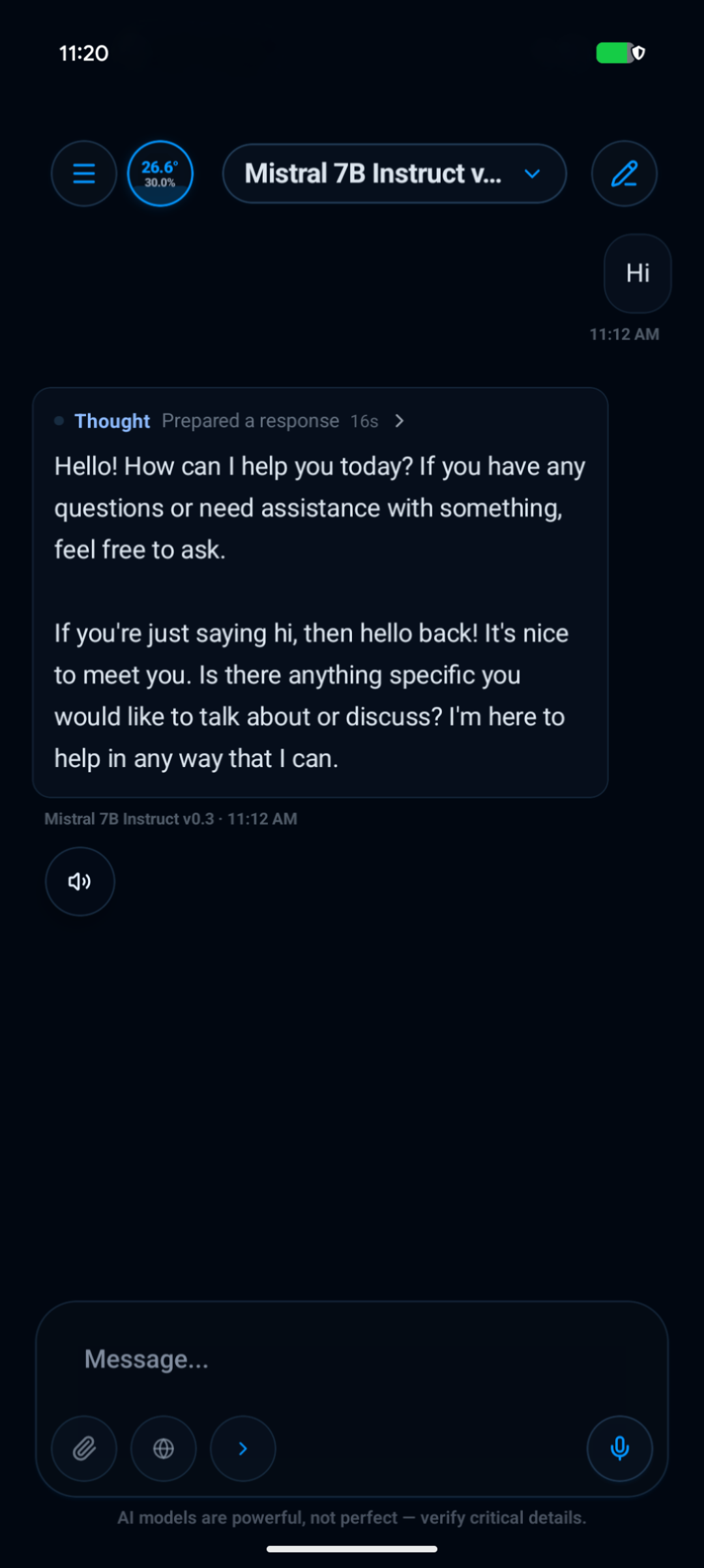
Local chat proof with a downloaded model inside Q17 Private AI.
Google Pixel 9Q17 Private AI shows backend capability and fallback behavior clearly, so users can see when CPU, OpenCL, or Vulkan paths are available or selected.
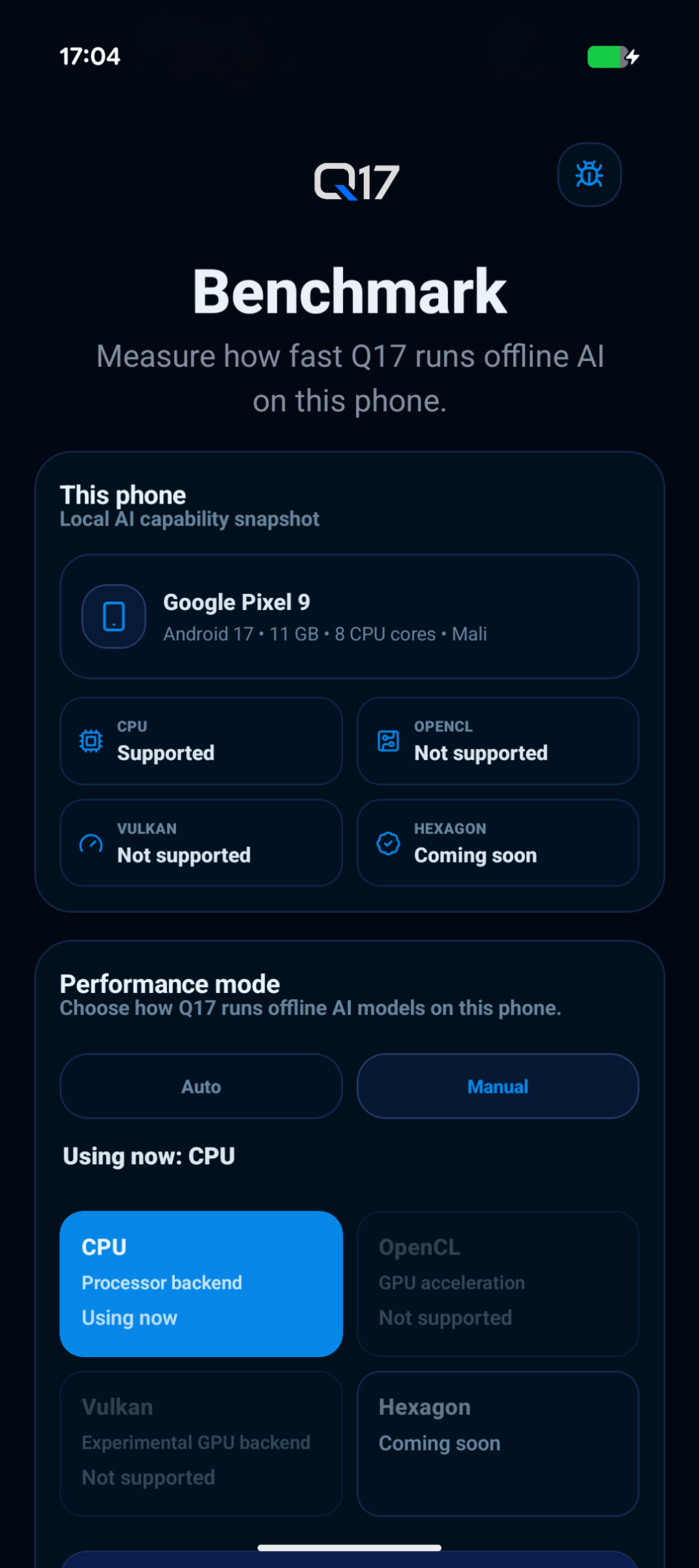
Capability screen showing safe backend availability on Pixel/Tensor-class hardware.
Google Pixel 9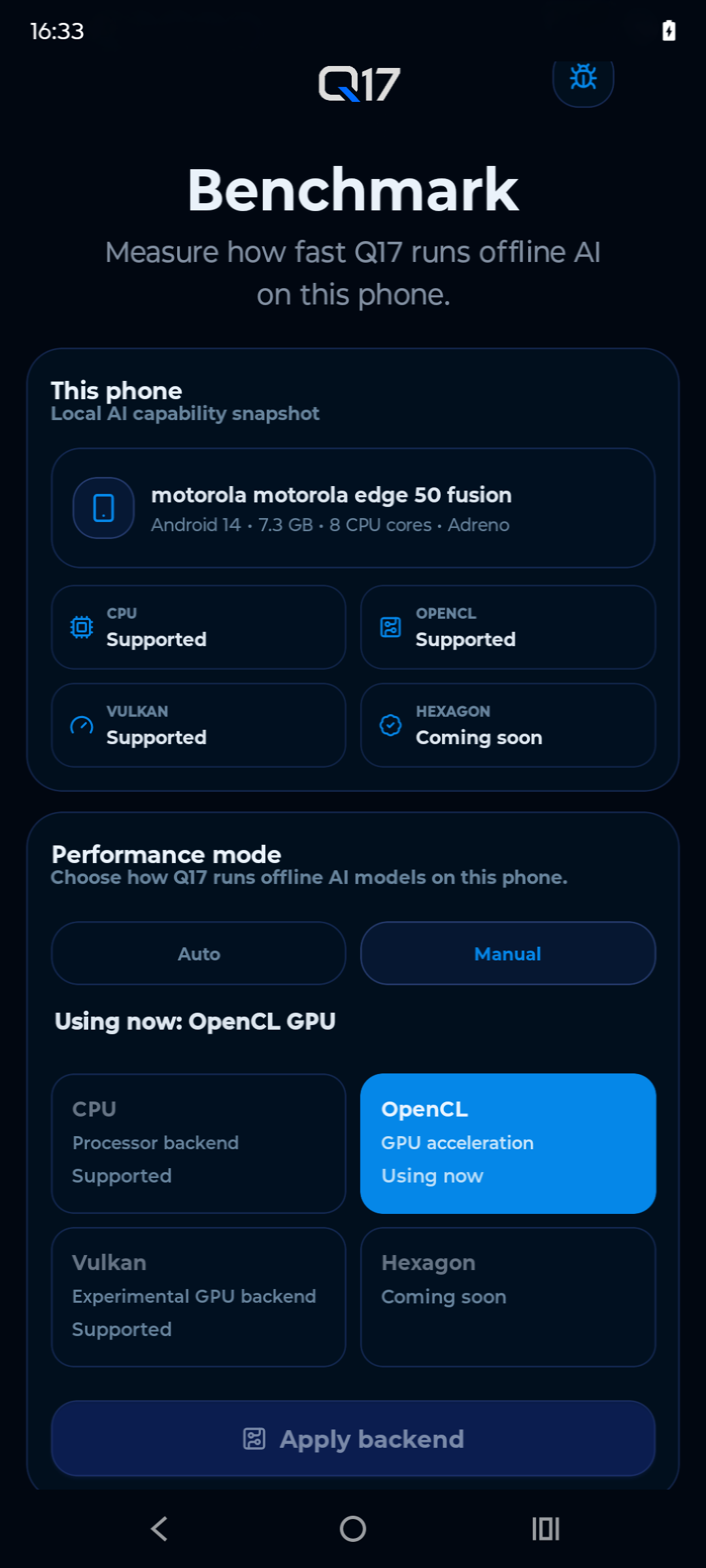
Capability proof for backend selection and safe fallback behavior.
Moto Edge 50These screenshots represent selected proof devices and workflows. Future updates may add more device families, model results, and backend validation screenshots as Q17 Private AI evolves.